
Conventional Septic System Installation
Professional septic tank and drain field installation for residential and commercial properties. Our experienced company helps Florida business and home owners with complete waste disposal and sewage management needs.
Licensed & Insured Florida Contractors
24/7 Emergency Response Statewide
Upfront Pricing – No Hidden Fees
Full Service Guarantee & Written Reports
5 Highlights on Conventional Septic System Installation
Full site assessment and perc testing
Our licensed installers excavate test pits, evaluate soil profiles, and conduct percolation tests to confirm your property can support a gravity fed conventional septic system before any work begins. Soil type and location factors affect which system design is best suited for your specific needs.
Engineered system design
We size every septic tank, distribution box, and leach field based on bedroom count, daily flow calculations, and local health department requirements to deliver a compliant, long lasting installation designed for efficient waste disposal and long-term performance.
Quality materials and components
Each conventional septic system installation uses precast reinforced concrete tanks, Schedule 40 PVC pipe, washed gravel aggregate, and geotextile filter fabric from trusted manufacturers. We also install plastic and fiberglass septic tanks when site conditions or advanced technology options call for lighter weight materials.
Permitted and code compliant
A-1 Bill Gibson Septic Service pulls all required permits, coordinates health department inspections, and provides certified as built drawings for every septic system we install. This complete process helps ensure you avoid costly repairs or compliance issues down the road.
Backed by experience
Our experienced crews have installed hundreds of conventional septic systems across residential lots, commercial parcels, and rural properties where municipal sewer system lines do not reach. Our expertise and specialized knowledge help guide every job from planning to completion.
Why Choose Our Conventional Septic System Installation
Conventional septic system installation is the core of what A-1 Bill Gibson Septic Service does best. We are a licensed, insured contractor with decades of field experience excavating, piping, and commissioning gravity fed septic systems that work reliably for decades. Our company combines proven expertise with essential attention to detail on every job we perform.
Our installers do not cut corners. We trench to exact grade specifications, compact backfill in measured lifts, and connect every inlet baffle, outlet baffle, and tee fitting to manufacturer standards. Each septic tank gets pressure tested for watertight integrity before we cover it. Every lateral line in the drain field gets laser leveled so effluent distributes evenly across the absorption area. This level of care helps ensure system efficiency and long-term reliability.
We handle the entire process from permit application through final health department inspection. That means one contractor, one point of contact, and one team accountable for the finished system. No subcontracted excavation crews. No finger pointing between trades. Consider us your complete resource for project management from start to finish.
Our pricing is transparent. You will receive a detailed written estimate that breaks down tank costs, pipe and aggregate quantities, excavation hours, and permit fees. We clearly outline all installation costs so you can make an informed decision. No surprise charges after we break ground.
A-1 Bill Gibson Septic Service stands behind every conventional septic system installation with a workmanship guarantee. If something we installed fails within the warranty period, we will repair or replace it at no additional cost. That is the kind of commitment a top rated septic contractor should offer, and it helps protect you from expensive repair costs in the long run.
Need Emergency Septic Service?
Our 24/7 emergency team responds quickly across all of Florida. Don’t wait for a small problem to become a disaster.
Signs You Need Conventional Septic System Installation
Conventional septic system installation is the right solution when specific site conditions and circumstances line up. Here are five key situations where you need a new system installed. Learn how to recognize these issues so you can call for help before problems lead to system failure or environmental contamination.
You're building on undeveloped land without sewer access:
New construction on rural or suburban lots that sit beyond municipal sewer mains requires an onsite wastewater treatment system. A conventional septic tank and drain field is the most proven, cost effective option when your soil percolation rate and water table depth meet local code requirements. Utility connections depend on site factors, so proper planning is critical.
Your existing cesspool or cesspit is failing:
Older properties sometimes rely on cesspools that predate modern septic regulations. When a cesspool collapses, saturates the surrounding soil, or contaminates nearby groundwater with coliform and pathogens, the health department will require you to decommission it and install a permitted conventional septic system. Failure to act can lead to serious environmental impact and costly repairs.
Your current septic system is beyond repair:
A waterlogged drain field with a thick biomat layer, a cracked concrete tank that will not hold watertight integrity, or an undersized system that overflows during normal daily flow all point toward full replacement rather than patchwork fixes. When repairs no longer work, a new installation is the only way to avoid ongoing issues and restore efficient solid waste management.
You're adding bedrooms or expanding square footage:
Design flow for a septic system ties directly to bedroom count. Adding a bedroom, finishing a basement with a bathroom, or converting a garage into living space can overload your existing system. A new, properly sized conventional septic system installation brings your property into compliance. We recommend scheduling a consultation to ensure the system is designed to handle your household needs.
Health department or code enforcement has issued a notice of violation:
A non compliant or failed system that discharges untreated effluent to the surface, backs up into the house drain, or pollutes a nearby riparian zone will trigger enforcement action. Installing a new conventional septic system is often the only path to resolve the violation and protect public health. Do not wait – call us to learn how we can help you address the situation before fines or legal action affect your property.
Our Conventional Septic System Installation Process
Conventional septic system installation is a structured, multi step process that A-1 Bill Gibson Septic Service follows on every project. This guide walks you through each phase so you know what to consider and what to expect from our specialized team.
Site evaluation and soil testing
We survey the property, dig perc holes and test pits, and assess the soil profile for percolation rate, depth to bedrock, and seasonal water table elevation. These results determine whether a conventional system will work on your lot. Site factors like soil type and location are considered carefully before we perform any excavation.
System design and permitting
Our team designs the septic tank size, drain field layout, and distribution box placement based on soil absorption rates and projected daily flow. Where lot conditions do not support a conventional layout, we may recommend a mound system or aerobic treatment unit as an alternative. We submit engineered plans to the local health department and secure the installation permit.
Excavation and tank placement
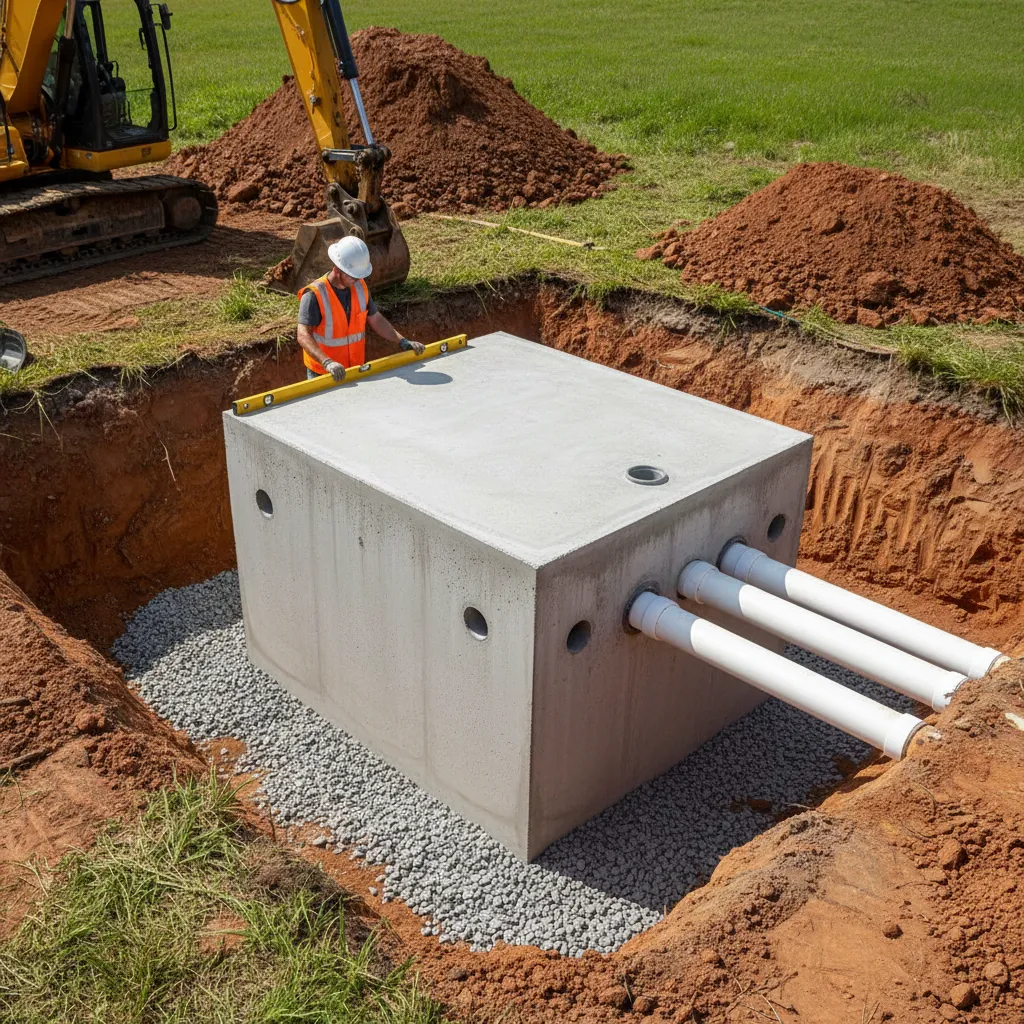
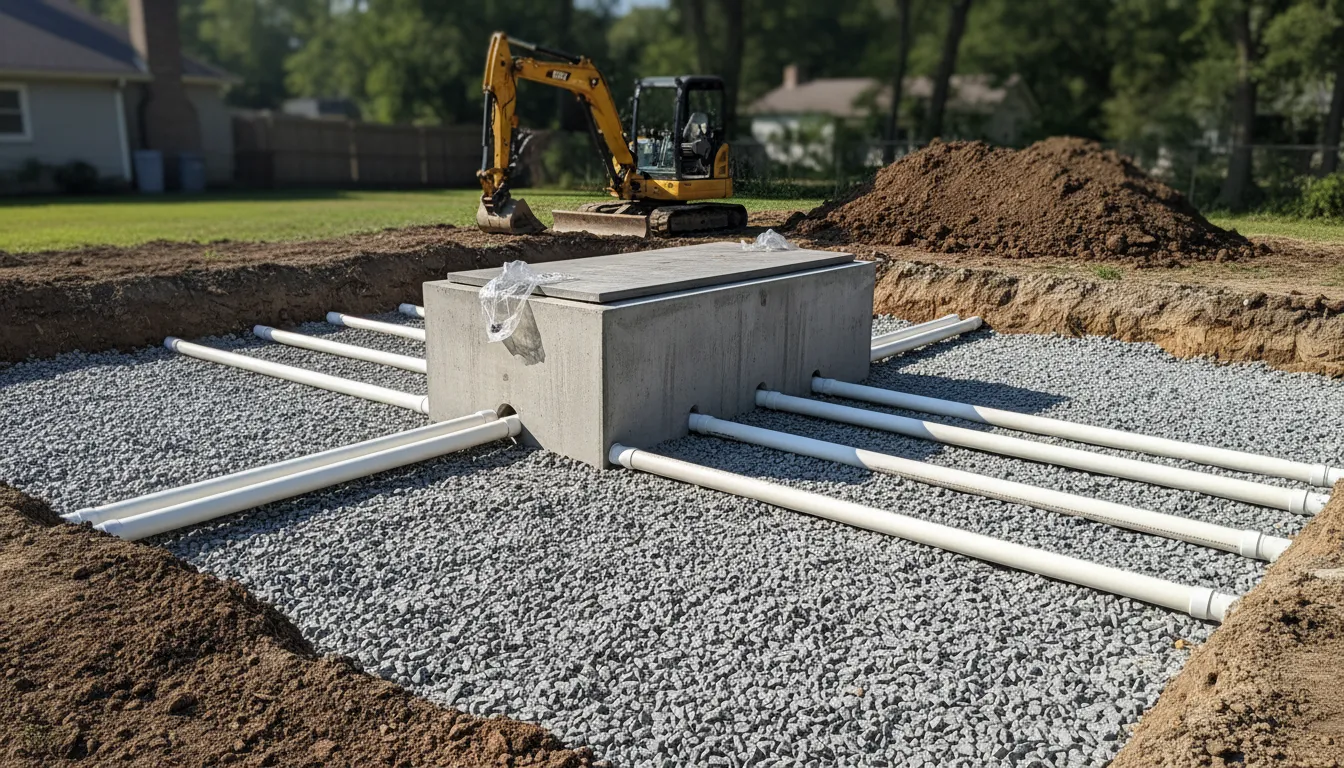
Our excavator and backhoe operators dig the tank hole, trench the building sewer line from the house, and excavate lateral trenches for the leach field. We set the precast concrete septic tank on a compacted, level base and verify grade on all pipe runs. Scheduling this phase depends on weather and permit approval timing.
Pipe installation and connection
Crews install Schedule 40 PVC drainpipe from the house to the tank inlet, connect the outlet to the distribution box, and run perforated leach lines through gravel filled trenches wrapped in geotextile fabric. Every coupling, elbow, and wye fitting gets solvent welded and inspected. This attention to detail is essential for efficient sewage flow and disposal.
Backfill, grading, and inspection
We backfill trenches in layers, compact the soil to prevent settling, and grade the surface for proper drainage away from the system. The health department inspector verifies all components before we install risers, access lids, and finish grading. We provide as built drawings and commission the system for use. Regular maintenance and routine pumping will help keep your new system running at peak efficiency for years.
Brands We Use
Conventional septic system installation demands reliable, field proven components. A-1 Bill Gibson Septic Service installs products from these trusted manufacturers:





Every component we install meets or exceeds local health department specifications and manufacturer load ratings.
Other Services
conventional septic system installation
septic tank installation
gravity fed septic system install
septic system installer near me
residential septic installation
drain field construction service
new septic system installation
onsite wastewater system installation
leach field and tank installation
septic tank and drain field installation
conventional septic install cost
perc test and septic design
professional septic system installation
licensed septic contractor
septic permit and site evaluation
Ready to Schedule Your Service?
Get upfront pricing and expert service from Florida’s trusted septic professionals.
FAQs About Conventional Septic System Installation
What is a conventional septic system?
A conventional septic system is a two part onsite wastewater treatment setup designed for efficient waste management. A buried septic tank receives raw influent from the house drain, separates solids from liquids, and allows anaerobic bacteria to decompose organic matter. Clarified effluent then flows by gravity through a distribution box into a network of perforated pipes laid in gravel filled trenches called a drain field or leach field, where soil microorganisms filter and treat the wastewater before it percolates into the subsurface. On average, a properly maintained system can last 25 to 30 years or more.
When should I schedule a conventional septic system installation?
Schedule your installation when you are building a new home on a lot without municipal sewer access, replacing a failed or non compliant system, or upgrading from a cesspool. Spring and summer typically offer the best ground conditions for excavation, but A-1 Bill Gibson Septic Service installs systems year round when weather and soil conditions allow. Call our office to discuss scheduling and learn more about what the job involves.
Why does a perc test matter before installation?
The percolation test measures how fast water drains through your soil. Sandy and loamy soils absorb effluent well. Clayey or silty soils drain slowly and may not support a conventional drain field. Your perc test results determine whether a conventional septic system installation is feasible and dictate the required size of the absorption field. Understanding your soil type is essential for proper system design and helps avoid failure in the long run.
How long does a conventional septic system installation take?
Most residential installations take three to five working days from excavation through final inspection. Larger commercial systems or sites with difficult access, rocky soil, or high water tables may require additional time. Timeline can also depend on permit approval and inspector availability, so proper planning helps the project stay on track.
Can I install a conventional septic system on any property?
Not every lot qualifies. The property must have adequate setback distances from wells, property lines, waterways, and structures. Soil must pass a percolation test, and the water table must sit far enough below the trench bottom. A-1 Bill Gibson Septic Service conducts a full site assessment to determine if your property meets all requirements before you commit to the project. Our expertise ensures you receive an informed recommendation on which system type is best suited to your site.
Does a new septic system need a permit?
Yes. Every conventional septic system installation requires a permit from the local health department or code enforcement office. A-1 Bill Gibson Septic Service handles the entire permit application, submits engineered site plans, and coordinates all required inspections so you stay compliant from start to finish. We take care of the paperwork so you can focus on your construction or renovation project.