
Drain Field Repair & Restoration
Professional drain field repair and restoration services that return your septic system to full function – backed by decades of hands-on field experience. As a trusted septic company, we provide fast response and emergency solutions for the full range of drain field issues. Contact us for quality service you can rely on.
Licensed & Insured Florida Contractors
24/7 Emergency Response Statewide
Upfront Pricing – No Hidden Fees
Full Service Guarantee & Written Reports
5 Highlights on Drain Field Repair & Restoration
Expert Diagnosis of Failing Drain Fields
Our technicians use advanced camera technology to inspect laterals, assess biomat buildup, and test percolation rates to pinpoint exactly why your leach field is underperforming. We identify issues accurately. We don’t guess. We diagnose.
Biomat Removal and Soil Rejuvenation
We fracture compacted soil, jet perforated pipes clean, and apply targeted bioaugmentation additives to break down the anaerobic biomat layer choking your absorption trenches. These repairs restore efficiency to your system.
Full Lateral and Distribution Box Replacement
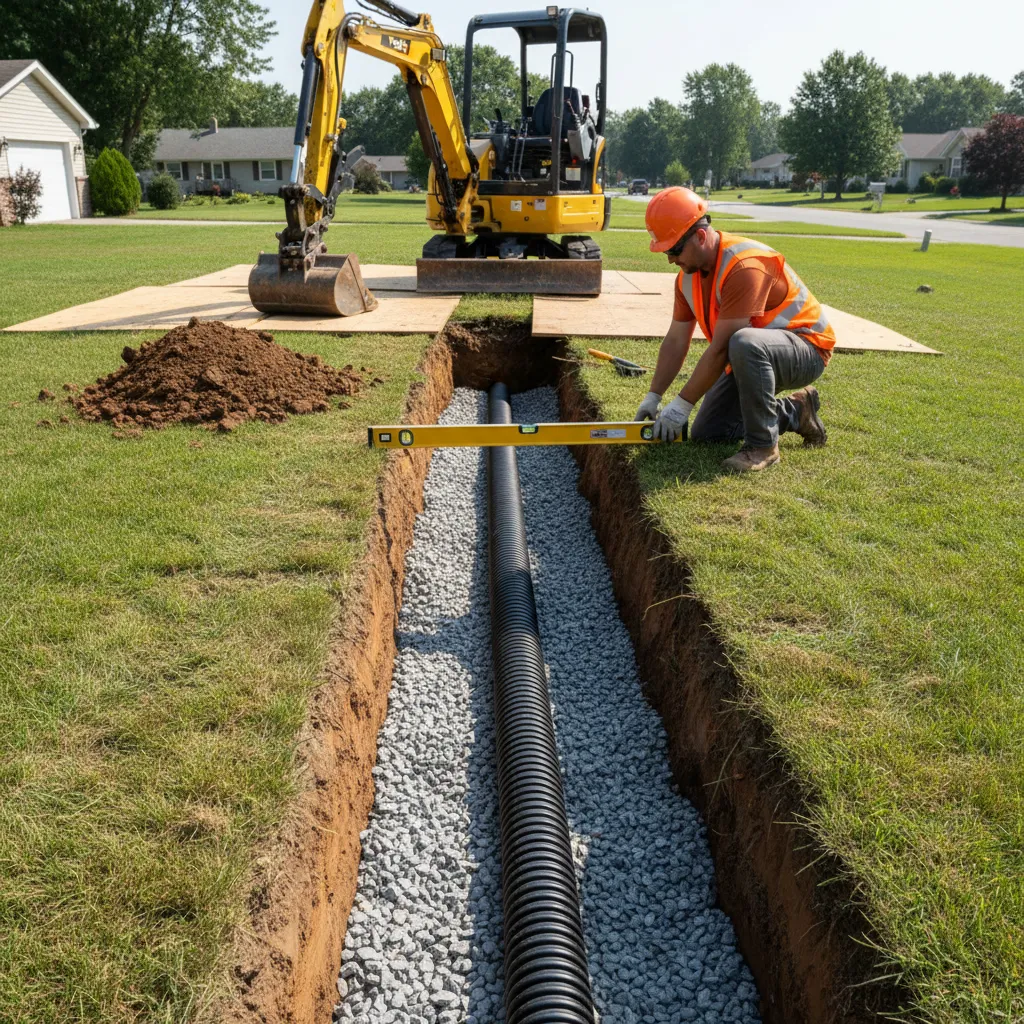
When corrugated or perforated pipe has collapsed or the D-box has failed, we excavate, replace damaged components, and backfill with fresh drainrock and gravel to restore proper effluent dispersal and get your system functioning again.
Mound System and Sand Filter Restoration
Alternative systems need specialized repair. We handle mound systems, sand filters, and chamber systems with the same precision we bring to conventional drain fields, offering options tailored to your property.
Permitting and As-Built Documentation
Every drain field restoration project includes coordination with local health departments, updated as-built drawings, and full compliance with current septic permit requirements. We ensure all documentation is clear and complete.
Why Choose Our Drain Field Repair & Restoration
Drain field repair and restoration is the core of what A-1 Bill Gibson Septic Service does best. Our experienced company has spent years diagnosing saturated leach fields, remediating waterlogged absorption beds, and replacing failed laterals across residential and commercial properties.
Our crew arrives with vacuum trucks, jetters, and camera scopes ready to work. We don’t subcontract. Every technician on your property works for us directly, and each one carries training and knowledge in subsurface wastewater system diagnostics. That professionalism means faster turnaround, greater efficiency, and fewer callbacks.
We stand behind our drain field restoration work with a written guarantee. If a repaired section fails within our warranty period, we return and handle fixing it at no additional charge. No fine print. No runaround. You can trust that the job gets done right.
A-1 Bill Gibson Septic Service is a licensed and certified company holding all required state and local certifications for septic system repair and installation. We are fully insured with full liability coverage and maintain active membership in professional septic industry associations. Our pricing is honest and upfront – you’ll receive a detailed written quote before we break ground.
Choosing a qualified, trusted team for your drain field restoration protects your property value, your groundwater, and your family’s health. Our reputation is built on satisfied customer after satisfied customer, and we treat every job like it’s our own backyard – always focused on long-term solutions.
Need Emergency Septic Service?
Our 24/7 emergency team responds quickly across all of Florida. Don’t wait for a small problem to become a disaster.
Signs You Need Drain Field Repair & Restoration
Drain field failure rarely happens overnight. The warning signs build gradually, and catching these issues early can help you prevent thousands in full replacement cost. Here are five detailed indicators that your leach field needs professional attention.
Persistent Wet Spots Over the Drain Field Area:
Saturated soil directly above your absorption trenches signals that effluent isn’t percolating downward as designed. When the biomat layer grows too thick or the gravel bed becomes compacted, wastewater seeps upward instead of infiltrating into the subsurface soil. Standing water or spongy ground over your laterals means the field is hydraulically overloaded, creating risk of surface leaks.
Sewage Odor in the Yard:
Unpleasant odors near the drain field indicate that raw or partially treated effluent is surfacing. Anaerobic decomposition at or near ground level produces hydrogen sulfide gas – that unmistakable rotten egg smell. This goes beyond a nuisance. It signals contaminated conditions and potential health hazards that require immediate remediation.
Slow Drains and Toilet Backups Throughout the House:
When every fixture in your home drains sluggishly at the same time, the problem usually isn’t a single clogged plumbing line. A failing drain field creates backpressure through the distribution box and into the septic tank itself. Effluent has nowhere to go, so it backs up through the sewer connection toward your toilets, sinks, and the rest of your plumbing system.
Bright Green Grass Strips Over Lateral Lines:
Unusually lush vegetation growing in straight lines across your yard traces the path of your perforated pipes. The grass is feeding on nutrient-rich effluent that should be filtering deep into the soil. This pattern confirms that your absorption bed is rejecting wastewater at a shallow depth.
Septic Alarm Activation or High Tank Levels:
If your septic alarm triggers repeatedly or your pumper truck operator reports that the tank level hasn’t dropped between scheduled pumpings, the drain field isn’t accepting effluent. The dosing chamber or pump chamber fills up because the field is saturated, stagnant, or structurally compromised. To avoid complete failure, contact us when your system stops working as it should operate.
Our Drain Field Repair & Restoration Process
Drain field restoration is a structured, methodical process based on proven techniques. A-1 Bill Gibson Septic Service follows a proven sequence to return your leach field to active, functional status.
Initial Site Assessment
We begin with a thorough inspection. Our technicians locate the septic tank, distribution box, and lateral lines using as-built drawings and electronic locators. We check tank levels, inspect baffles and effluent filters, track any surface indicators of failure, and gather all relevant information about your system.
Camera Inspection and Percolation Testing
We camera scope the header pipe and laterals to identify crushed sections, root intrusion, or heavy biomat accumulation. We conduct perc tests with a soil probe to measure current percolation rates and understand how much absorption capacity remains.
Jetting and Biomat Treatment
High-pressure jetting scours the interior walls of perforated pipes and dislodges sediment from the gravel bed. We then introduce professional-grade bioaugmentation additives and bacterial cultures to accelerate decomposition of the biomat layer.
Excavation and Component Replacement
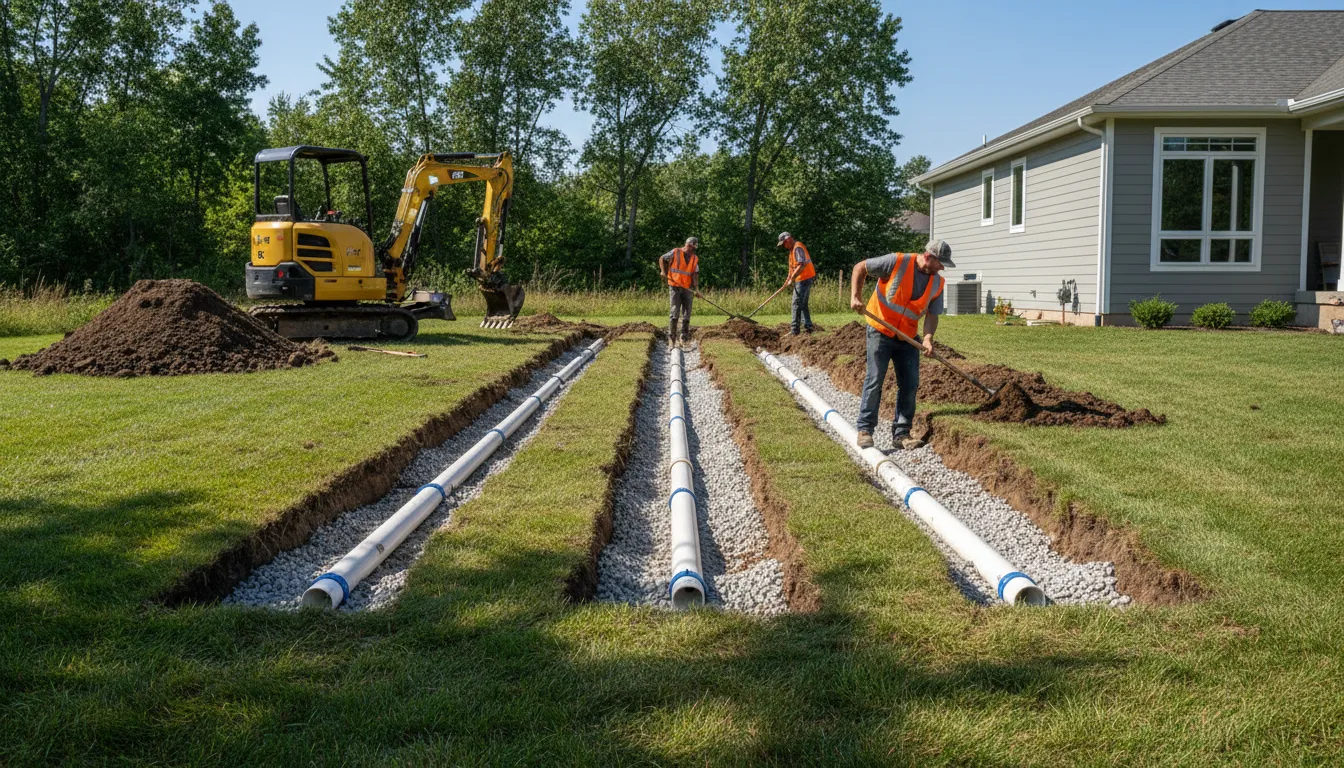
When pipes have collapsed or the aggregate has failed, we trench out damaged sections and install new perforated pipe, fresh gravel or drainrock, and geotextile fabric. We minimize digging where possible and replace cracked D-boxes, broken float switches, and deteriorated fittings.
Backfill, Grading, and System Commissioning
We backfill all excavated areas with approved material, grade the surface for proper drainage away from the field, and commission the restored system. Final testing confirms that effluent disperses evenly across all laterals and the drain field operates at designed capacity, helping extend the life of your system.
Brands We Use
Drain field repair and restoration demands reliable, field-proven products. A-1 Bill Gibson Septic Service installs and specifies components from these trusted manufacturers:






Every product we install meets or exceeds local code requirements.
Other Services
drain field repair
leach field repair
septic lateral line replacement
drain field restoration
absorption bed restoration
biomat removal service
failing drain field repair
septic drain field fix
soil percolation remediation
drain field replacement
leach field replacement
distribution box repair septic
residential drain field service
commercial leach field restoration
septic system drain field rejuvenation
Ready to Schedule Your Service?
Get upfront pricing and expert service from Florida’s trusted septic professionals.
FAQs About Drain Field Repair & Restoration
What is drain field repair and restoration?
Drain field repair and restoration is the process of diagnosing, remediating, and rebuilding the subsurface absorption area of a septic system. This work can include jetting clogged laterals, removing biomat from gravel beds, replacing collapsed perforated pipe, and treating compacted soil to recover its percolation capacity. The goal is to help return the leach field to full effluent-absorbing function without a complete system replacement when possible, reducing overall cost.
When should I schedule drain field restoration?
Schedule a professional evaluation as soon as you notice wet spots over the field, persistent sewage odors, simultaneous slow drains in the house, or repeated septic alarm activations. We offer flexible scheduling and can often accommodate same-day service for emergency situations. Request an appointment early – intervention often allows targeted repair of specific laterals or the distribution box rather than full excavation and replacement of the entire absorption bed.
Why do drain fields fail?
Drain fields fail for several reasons. Biomat – a thick bacterial layer – accumulates on trench walls and reduces soil permeability. Compacted or waterlogged soil stops absorbing effluent. Tree roots infiltrate and crush perforated pipes. Hydraulic overloading from excessive water use through household utilities saturates the field beyond its designed capacity. Infrequent septic tank pumping and poor maintenance allows solids to migrate into the laterals and clog the gravel bed.
How long does a drain field restoration take?
Most residential drain field restorations take between two and five days depending on the extent of damage, soil conditions, and whether components need full replacement. A straightforward jetting and bioaugmentation treatment can wrap up in a single day. Excavation and lateral replacement on a larger system may require the full week. We’ll discuss the exact timeline with you and maintain clear communication throughout the project.
Can a completely failed drain field be restored?
In many cases, yes. A-1 Bill Gibson Septic Service has restored drain fields that other companies recommended replacing entirely. Soil fracturing, aggressive biomat treatment, and selective lateral replacement can bring a dormant field back to active status. Some situations do require full replacement – we’ll explain what we find after our camera inspection and perc testing, recommend the best approach, and keep you informed so you can make the right decision for your property.
Does drain field repair require a permit?
Most jurisdictions require a septic permit for any work involving excavation, pipe replacement, or modification of the absorption area. A-1 Bill Gibson Septic Service handles all permit applications, health department inspections, and updated as-built drawings as part of our standard drain field restoration service. We take care of the paperwork so you can focus on getting your system back in working order.