
Septic System Installation
Professional, comprehensive septic system installation for residential and commercial properties. Serving Florida homeowners and businesses with expert, environmentally friendly solutions designed to deliver lasting performance.
Licensed & Insured Florida Contractors
24/7 Emergency Response Statewide
Upfront Pricing – No Hidden Fees
Full Service Guarantee & Written Reports
5 Highlights on Septic System Installation
Full Site Evaluation and Perc Testing
Our licensed septic contractors perform thorough soil profile analysis and percolation rate testing before any excavation begins. We assess groundwater depth, water table levels, ground slope, and soil composition to determine the best system design for your property. This comprehensive site evaluation helps us understand how liquid waste will flow and ensures we protect the surrounding environment.
Conventional and Alternative System Design
We install a full range of systems including gravity-fed conventional septic tanks, mound systems, aerobic treatment units, chamber systems, and pressurized drip irrigation configurations. Each installation is designed to work efficiently with your lot’s specific drainage and absorption characteristics using advanced wastewater processing technology.
Permit Acquisition and Health Department Compliance
Our team handles all permit applications, setback calculations, easement documentation, and health department inspections. We keep your project compliant with local regulations and industry standards from the first site visit to final certification.
Precast Concrete, Polyethylene, and Fiberglass Tanks
We install septic tanks in multiple materials and capacities, designed for every utility level. Whether your property needs a 1,000-gallon residential unit or a high-capacity commercial holding tank, we connect, seal, and commission every component to ensure proper solid waste and liquid separation.
Complete Drain Field and Distribution Box Installation
Our crews handle all digging, excavation, trenching, grading, and backfill for absorption trenches, leach fields, and percolation beds. We place distribution boxes, lateral lines, perforated pipes, gravel beds, and geotextile fabric to manufacturer specifications, ensuring proper slope for optimal flow.
Why Choose Our Septic System Installation
Septic system installation is a long-term investment in your property’s wastewater management. A-1 Bill Gibson Septic Service brings decades of hands-on field experience to every residential and commercial project we take on. Our experienced, expert team is known for delivering exceptional customer service and taking care of every detail so you can trust the work is done right.
We’re a licensed and certified septic contractor with specialized equipment. Our crews operate their own excavators, backhoes, and pump trucks. We don’t subcontract the critical work. The same team that evaluates your soil profile will trench your absorption field, set your tank, and connect your plumbing – working efficiently to deliver results on schedule.
Every installation starts with accurate site evaluation. We run perc tests, map your well location and property lines, and calculate setback distances from any road or structure before we submit permit paperwork to the health department. That preparation helps prevent issues, costly redesigns, and inspection failures. We verify where utilities are located before digging begins.
We stand behind our work. Our septic system installations include as-built drawings, a detailed maintenance schedule, and a written workmanship guarantee. We help you learn how your system works so you can maintain it properly. We also offer ongoing maintenance contracts so your new system stays maintained and functional for decades.
Our pricing is straightforward. We provide itemized quotes that cover excavation, tank materials, drain field components, backfill, grading, and final inspection fees. No surprise charges after the backhoe arrives. Rest assured, our attention to efficiency and detail gives you peace of mind. A-1 Bill Gibson Septic Service is the trusted, top-rated choice for professional septic system installation done right the first time. Contact us today to learn more.
Need Emergency Septic Service?
Our 24/7 emergency team responds quickly across all of Florida. Don’t wait for a small problem to become a disaster.
Signs You Need Septic System Installation
Septic system installation becomes necessary under several specific conditions. Recognizing these signs early saves you money and protects your groundwater. If you face any of these issues, failing to act can affect the surrounding soil and potentially contaminate a nearby well, river, or lake.
You're Building on Undeveloped Land:
New construction on a lot without municipal sewer access or sewer lines requires installing a septic system. Before your foundation goes in, you’ll need a perc test, soil profile evaluation, and a permitted system design. The health department won’t issue an occupancy permit without a functioning, inspected septic installation, so going forward with construction requires this step.
Your Existing System Has Failed Beyond Repair:
Foul sewage surfacing in your yard, persistent effluent odors, and saturated leach fields signal a system that’s past its service life. Backups, flooding, and slow drains can occur when an aging septic tank shows corroded baffles, collapsed dividing walls, leaks, or a compromised clarified zone. When these issues lead to failing performance, replacement through full installation is the only compliant path forward.
You're Expanding Your Home or Business:
Adding bedrooms, bathrooms, or commercial kitchen capacity increases your daily wastewater volume from toilets, sinks, washing machines, and drains. Your current septic tank and drain field may not handle the load, which can cause backup problems. A new, properly sized installation with an upgraded distribution box and expanded lateral lines prevents overflows and backed-up plumbing.
Your Property Has a Condemned Cesspool or Cesspit:
Many jurisdictions now require homeowners to decommission old cesspools and install modern septic systems. These outdated structures lack proper filtration, leach untreated waste and blackwater into the soil, and contaminate groundwater with pathogens and coliform bacteria. This creates a serious environmental and health risk that can lead to costly remediation.
Perc Test Results Show Your Current Site Won't Support Repairs:
Sometimes the soil around an existing drain field becomes so saturated with biomat that remediation or line repair isn’t feasible. A qualified septic contractor will assess whether a new installation in a different area of your property – using a mound system or alternative technology – is the best solution. We recommend acting quickly once this diagnosis is confirmed.
Our Septic System Installation Process
Septic system installation follows a precise, comprehensive sequence of steps. Each phase builds on the one before it.
Site Evaluation and Soil Testing
We visit your property, identify well locations and setback requirements, and dig test pits to examine the soil profile and ground conditions. We conduct perc tests to measure your soil’s percolation rate and determine whether a conventional, mound, or alternative system fits your site. This data is used to guide every design decision.
System Design and Permitting
Based on test results, we design a system that matches your property’s wastewater output and soil absorption capacity while meeting all local regulations. We prepare permit applications, submit plans to the health department, and schedule required inspections – handling the paperwork efficiently so your project moves forward.
Excavation and Tank Placement
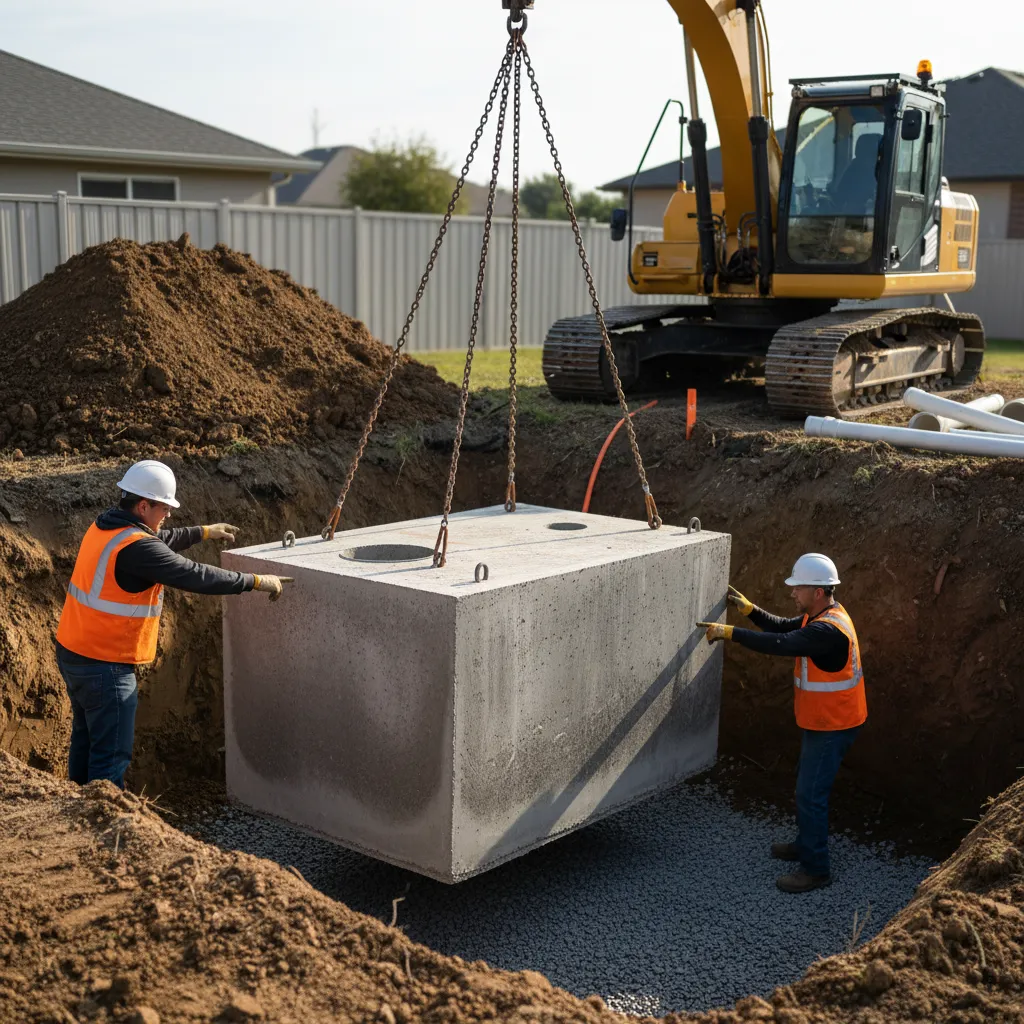
Our crew excavates the tank pit and trenches for the sewer line, distribution box, and lateral lines. We set the precast concrete or polyethylene septic tank, install baffles, risers, lids, and access ports, then connect the inlet and outlet piping. All sewer lines are properly connected and tested before backfilling.
Drain Field Construction
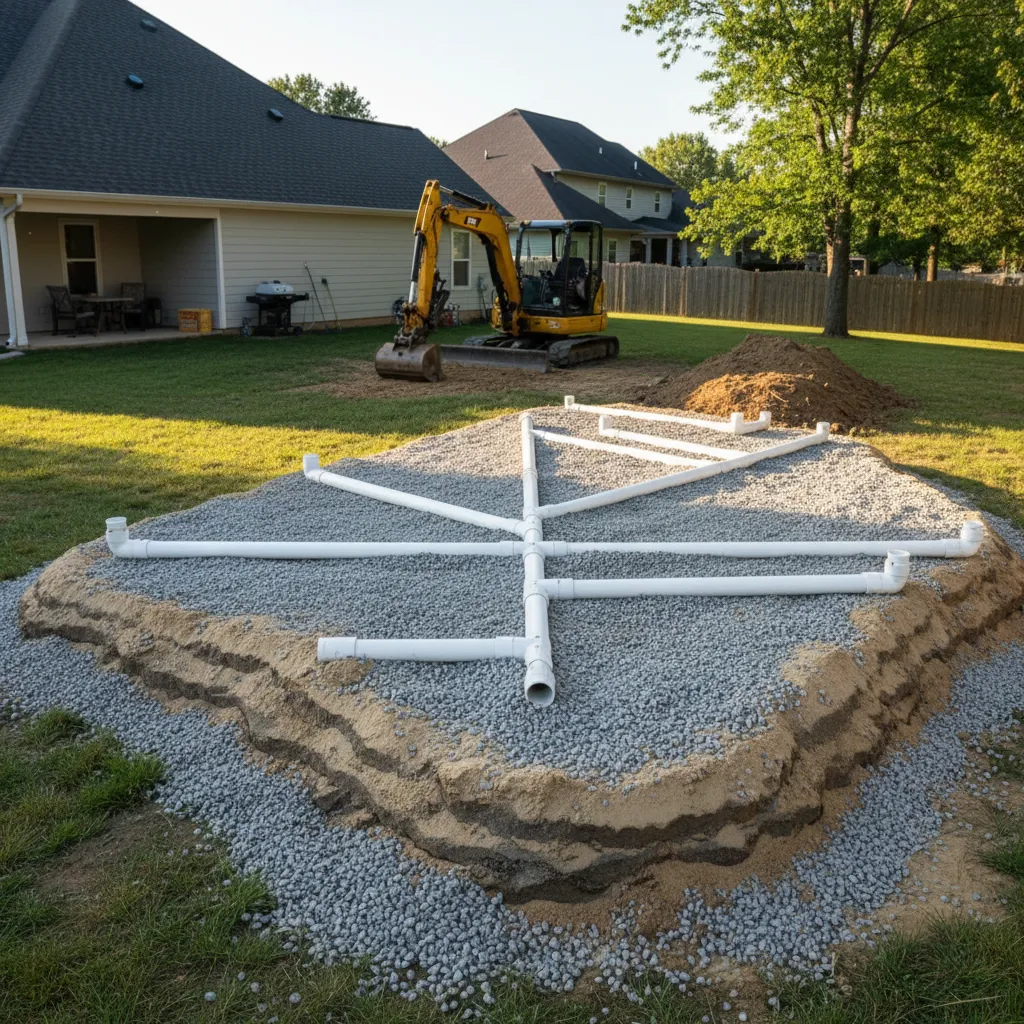
We trench absorption lines, lay perforated pipe over drainrock or chamber systems, and cover everything with geotextile fabric. We grade the site to direct surface water away from the leach field and remove any debris that could impede flow. Proper grading helps prevent flooding and pooling.
Final Inspection, Backfill, and Commissioning
After the health department inspector certifies the installation, we backfill, compact the soil, and activate the system. We provide as-built drawings and walk you through your new system’s maintenance requirements, including cleaning schedules. We help you understand proper care from day one.
Brands We Use
Septic system installation demands reliable, field-proven components. A-1 Bill Gibson Septic Service installs products from these trusted manufacturers:






We select every component based on your system’s design specifications, soil conditions, and expected wastewater volume.
Other Services
Septic system installation
Septic tank installation
Install new septic system cost
Residential septic installation
Home septic system install
Perc test and septic design
Commercial septic installation
New septic system for business
Drain field installation service
Septic system replacement
Replace old septic tank
Leach field and distribution box
Septic installer near me
Licensed septic contractor
Septic permit and site evaluation
Ready to Schedule Your Service?
Get upfront pricing and expert service from Florida’s trusted septic professionals.
FAQs About Septic System Installation
What is septic system installation?
Septic system installation is the complete process of designing, permitting, excavating, and constructing an on-site wastewater treatment system. It includes placing a septic tank where solid waste is processed and liquid is treated, building a drain field or leach field, connecting a distribution box, and linking all pipes to your home or building’s plumbing.
How long does a new septic system installation take?
Most residential installations take three to five days of working on site once the permit is approved. Permitting itself can take two to six weeks depending on your local health department’s schedule and whether soil testing is already complete.
When should I replace my septic system instead of repairing it?
You should consider full installation when your tank is structurally compromised, your drain field is permanently saturated, you experience frequent backup problems, or your system can’t handle your property’s current wastewater volume. A certified septic contractor can diagnose whether line repair or full replacement makes more financial sense.
How much does septic system installation cost?
Costs vary based on system type, tank size, soil conditions, and local permit fees. A conventional gravity-fed system typically costs less than a mound system or aerobic treatment unit. We provide detailed, itemized estimates before any work begins. Contact us or visit our services page to request a quote.
Can I install a septic system on any property?
Not every lot qualifies. The soil must pass a perc test, and your property needs adequate ground space for setbacks from wells, property lines, and structures. If standard percolation rates aren’t met, alternative systems like mound installations or sand filters may still work. Our team can help determine where a system can be located on your property.
Does a new septic system need maintenance right away?
Yes. Bacteria colonies need time to establish inside the tank. Avoid flushing harsh chemicals, grease, or non-biodegradable materials during the first several months. Schedule your first inspection within one year, and pump the tank every three to five years depending on household size and usage. Regular cleaning and maintenance helps prevent emergency situations.