
Grease Trap Installation
Professional grease trap installation for residential, commercial, and industrial properties
Licensed & Insured Florida Contractors
24/7 Emergency Response Statewide
Upfront Pricing – No Hidden Fees
Full Service Guarantee & Written Reports
5 Highlights on Grease Trap Installation
Code compliant sizing and placement
Every grease trap we install meets local health department regulations and environmental regulations, with proper interceptor capacity calculated for your specific flow rate and grease laden discharge volume. Our work ensures your facility will meet all municipal ordinance requirements.
Precast concrete, fiberglass, and steel options
We stock and install high capacity grease interceptors from trusted manufacturers, giving you corrosion resistant units built for decades of heavy duty FOG separation. Each unit is reliable and ready to handle cooking oil, used cooking oil, and other fats from commercial kitchens.
Full site evaluation included
Our certified technicians perform soil tests, measure setback distances, and assess your existing plumbing configuration and other plumbing needs before any trenching or excavation begins. We determine the best placement to ensure efficient operation and prevent future issues.
Same day permitting assistance
We handle permit applications, coordinate health department inspections, and provide as built drawings so your grease trap installation stays on schedule and fully compliant. Request a free estimate and we will offer a detailed quote for your specific needs.
Backed by a service contract guarantee
Each installation includes a maintenance log, recommended pumping schedule, and optional routine trap service agreement to keep your grease interceptor functioning at peak retention capacity. Regular maintenance and trap maintenance ensure your system keeps running smooth for years.
Why Choose Our Grease Trap Installation
Grease trap installation is a specialized trade that demands licensed professionals who understand wastewater flow dynamics, FOG retention requirements, and local code enforcement standards. A-1 Bill Gibson Septic Service has built a trusted reputation serving the region for delivering top-notch interceptor installations on time and within budget. As a family owned company, we take pride in every job done right.
Our team holds current certifications in commercial and residential grease interceptor systems. We don’t subcontract. Every technician on your job site works directly for us, trained in proper trenching, grading, and pipe connections specific to grease trap systems. That means fewer mistakes, tighter seals, and watertight compartments from day one. Our equipment and trucks are ready for any job.
We carry full liability coverage and stand behind every installation with a written workmanship guarantee. If a gasket fails, a partition shifts, or a baffle needs adjustment within the warranty period, we return and correct it at no charge. Our repair work is backed by the same commitment to safety and quality.
What separates our grease trap installation service from competitors is thoroughness. We don’t just drop a unit in the ground. We calculate your hydraulic load, verify interceptor capacity against your menu output or production volume, and confirm that every inlet, outlet, and flow control device meets the exact specifications your inspector will check. You get a compliant, permitted, and fully documented grease trap installation that protects your property and your business license. Contact us today to make an appointment.
Need Emergency Septic Service?
Our 24/7 emergency team responds quickly across all of Florida. Don’t wait for a small problem to become a disaster.
Signs You Need Grease Trap Installation
Grease trap installation becomes essential when your property shows clear signs of FOG buildup, drainage failure, or regulatory noncompliance. Here are five detailed scenarios that signal it’s time to call a qualified installer.
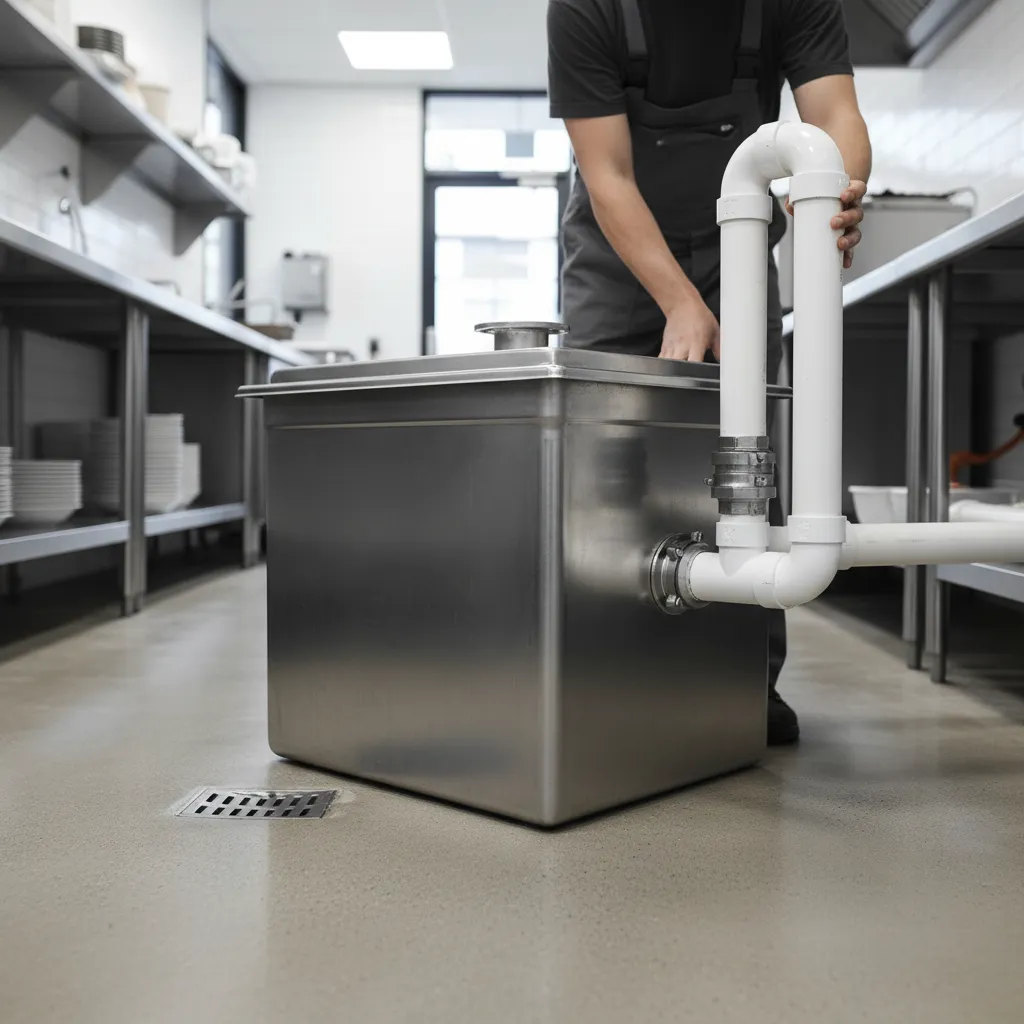
Slow draining sinks and floor drains:
When fats, oils, and grease accumulate inside your conveyance pipes without an interceptor to separate them, the interior walls coat over with a greasy, sludgy residue. Water backs up and causes backups throughout your facility. Drains gurgle. The problem compounds daily because there’s no retention system catching FOG before it enters your sewer line or lateral line. Clogging becomes a constant issue that disrupts operations.
Foul smelling odors near kitchen discharge points:
Malodorous gases escape when grease decomposes inside pipes that lack a proper grease trap. The stagnant, anaerobic conditions produce hydrogen sulfide, and that rotten egg smell drives away customers and triggers health department complaints. Proper grease removal and regular grease trap cleaning prevent these environmental issues.
Health department violation or code enforcement notice:
Municipal regulations require commercial kitchens, restaurants, and food processing facilities to operate a permitted grease interceptor to meet environmental regulations. If you’ve received a noncompliance citation, a professional grease trap installation resolves the violation and helps you avoid fines from escalating. Results may vary by jurisdiction, but compliance is essential.
New construction or kitchen renovation:
Any new commercial kitchen build or significant plumbing retrofit requires a grease trap sized to the projected organic load. Skipping this step during construction means costly excavation later when inspectors flag the missing interceptor. Installing the right unit from the start ensures efficient disposal of FOG and keeps your kitchen running without downtime.
Recurring sewer line blockages:
If your plumber snakes or hydro jets the same grease clogged line repeatedly, you’re treating symptoms instead of the cause. A properly installed grease trap intercepts FOG at the source, preventing solids laden waste from ever reaching your main sewer connection. Repeated blockages almost always indicate the absence of an adequate grease interceptor. Leaks and pipe damage often result from these recurring issues.
Our Grease Trap Installation Process
Grease trap installation follows a precise sequence that our technicians execute on every job, whether it’s a compact under sink unit or a large buried interceptor. We ensure every step is done right the first time.
Site evaluation and sizing
We inspect your facility, count fixture units, measure peak wastewater flow, and calculate the correct grease trap sizing based on retention time requirements and local regulation formulas. This helps us determine the most efficient solution for your specific needs.
Permit application
We prepare all documentation, submit permit paperwork to your local health department, and schedule the required inspections. Nothing gets buried without approval. Read all permit requirements carefully – we handle this so you remain compliant.
Excavation and trenching
Our crew excavates the installation area to the engineered depth, grades the trench for proper gravitational flow, and compacts the base material to create a level, stable foundation for the interceptor. Our trucks and equipment are ready for any excavation challenge.
Unit placement and connection
We lower the grease trap into position, align the inlet and outlet pipes, install baffles and tee fittings, and connect all plumbing using watertight seals, couplings, and check valves. Every joint gets tested. Keeping connections secure prevents leaks and ensures reliable operation.
Inspection and backfill
After the health department inspector approves the installation, we backfill around the unit, install risers and access lids, seal all penetrations, and grade the surface. You receive a complete maintenance log, as built drawing, and recommended pumping schedule for trap maintenance.
Commissioning
We run water through the system, verify flow rates, confirm the float switch and alarm function correctly on pump assisted units, and walk you through basic operation and regular maintenance procedures. We make sure your system is clean and running smooth before we leave.
Brands We Use
Grease trap installation quality depends on the interceptor and components your installer selects. A-1 Bill Gibson Septic Service works exclusively with proven, top rated manufacturers known for durability and code compliance.







Every unit we install carries the manufacturer’s warranty and meets NSF/ANSI standards.
Other Services
Grease trap installation
Grease interceptor installation
FOG separation system setup
Commercial grease trap install
Restaurant grease interceptor service
Kitchen wastewater retention unit
Grease trap installer near me
Professional grease trap contractor
Licensed interceptor installation service
Underground grease trap installation
Buried grease interceptor setup
Below grade FOG interceptor placement
Grease trap replacement and installation
New grease trap system install
Interceptor upgrade and retrofit service
Grease trap cleaning
Trap cleaning service
Regular grease removal
Emergency grease trap repair
24/7 emergency service
Cooking oil disposal
Ready to Schedule Your Service?
Get upfront pricing and expert service from Florida’s trusted septic professionals.
FAQs About Grease Trap Installation
What is a grease trap installation?
A grease trap installation is the process of sizing, placing, connecting, and commissioning a grease interceptor that separates fats, oils, and grease from wastewater before it enters the municipal sewer system or your septic tank. The interceptor slows the flow of water, allowing FOG to float and solids to settle so only clarified effluent discharges downstream. This essential service ensures proper disposal of cooking oil and used cooking oil while keeping your plumbing running smooth.
When does a property need a grease trap installed?
Any commercial kitchen, restaurant, cafeteria, or food processing facility that produces grease laden wastewater needs a permitted grease trap. New construction projects require one before opening. Existing facilities that receive health department violations or experience chronic drain blockages and backups also need a professional installation or retrofit. Contact us for a free estimate to determine your specific needs.
Why can't I install a grease trap myself?
Grease trap installation requires proper sizing calculations, permitted excavation, code compliant pipe connections, and a passing health department inspection. Incorrect sizing leads to overflow and noncompliance fines. Improper sealing causes leaks and groundwater contamination, creating environmental issues. A certified installer ensures the work meets every local regulation and helps you avoid costly repairs down the road.
How long does a grease trap installation take?
Most under sink units take two to four hours. Larger in ground interceptors typically require one to three days depending on excavation depth, soil conditions, and permit inspection scheduling. Results may vary based on site complexity. Our efficient crews minimize downtime so your kitchen can get back to running quickly.
Can you install a grease trap in an existing building?
Yes. We retrofit grease interceptors into existing plumbing systems regularly. Our technicians reroute drain lines, trench through concrete floors when necessary, and connect the new interceptor without disrupting your daily operations any longer than needed. We offer 24/7 emergency service if urgent installation is required.
How often does an installed grease trap need pumping?
Most grease traps require pumping every one to three months. Your specific pumping schedule depends on interceptor capacity, daily wastewater volume, and the amount of FOG your kitchen produces. We establish a trap service and regular grease removal schedule at the time of installation. Grease trap cleaning and trap cleaning on schedule help prevent clogging and keep your system clean. Our oil pickup and used cooking oil recycling services complement your regular maintenance program.
Do you offer emergency grease trap services?
Yes. We provide 24/7 emergency service for urgent grease trap repairs and emergency situations. Whether you’re dealing with sudden backups, leaks, or compliance issues that threaten to shut down your operation, our reliable team is ready to respond. Contact us anytime – we’re serving commercial kitchens across the region with top-notch emergency response.