
Commercial Septic Tank Pumping
Professional pump truck crews serving commercial properties with scheduled and emergency septic tank pumping services
Licensed & Insured Florida Contractors
24/7 Emergency Response Statewide
Upfront Pricing – No Hidden Fees
Full Service Guarantee & Written Reports
5 Highlights on Commercial Septic Tank Pumping
High capacity vacuum trucks
Our fleet of pump trucks handles commercial septic tanks ranging from 1,000 to 10,000 gallons and beyond. We remove sludge, scum, and effluent in a single service visit, minimizing downtime for your business. Our team of trained technicians ensures your septic system is functioning properly and maintains peak efficiency.
Licensed and certified technicians
Every crew member holds current state licensing and hazardous waste handling credentials. Our experienced professionals comply with local health department regulations and maintain up to date compliance certificates for every job. Safety is our priority on every project.
Scheduled pumping programs
Commercial properties generate heavier hydraulic loads than residential septic systems. We set pumping frequency based on your tank’s gallonage, daily wastewater volume, and solids accumulation rate to prevent issues before they start. Our preventive maintenance programs help you avoid costly repairs and extend the lifespan of your system.
Grease trap and holding tank service
Restaurants, hotels, and food processing facilities rely on us to pump grease traps, dosing tanks, and holding tanks. We specialize in tailored solutions for commercial septic services and haul septage to permitted disposal sites and treatment plants.
24/7 emergency response
Overflowing septic tanks don’t wait for business hours. Our emergency crews arrive with vacuum trucks ready to dewater backed up systems, unclog inlet pipes, and restore normal flow to your drain field. When you need repair for a damaged system, we respond fast.
Why Choose Our Commercial Septic Tank Pumping
Commercial septic tank pumping is a service where experience and equipment make the difference between a clean job and a costly mess. A-1 Bill Gibson Septic Service has pumped commercial septic systems for decades. Our company knows the demands that restaurants, office parks, retail centers, churches, and industrial facilities place on subsurface wastewater systems. Whether you need routine maintenance or specialized septic services, our experts deliver professional results.
Our vacuum trucks carry the capacity to pump large precast concrete and fiberglass tanks without multiple trips. That saves you money and keeps costs manageable. It also means less disruption to your parking lot, your customers, and your daily operations. We arrive on schedule, locate access ports and risers quickly, and complete the job with professional precision. When you expect service excellence, our team delivers.
We’re a trusted, top rated septic contractor and service provider with full licensing, liability coverage, and regulatory compliance documentation. Every load of septage we haul goes to a permitted disposal site or treatment plant. We provide detailed service records that satisfy health department inspectors during routine audits. Homeowners and commercial property managers alike trust our inspection services and maintenance services to keep their septic systems performing at peak efficiency.
Our pumping crews also perform camera inspections of inlet and outlet pipes, check baffles for corrosion, and assess your distribution box during each visit. We conduct inspection services and testing to identify issues before they become major problems. You get a qualified diagnostic assessment bundled with every pumping appointment. No hidden fees. No surprise charges. We provide a free estimate and quote the job before we start the truck. Rates vary based on tank size and project scope, so contact us to determine the price range for your specific needs.
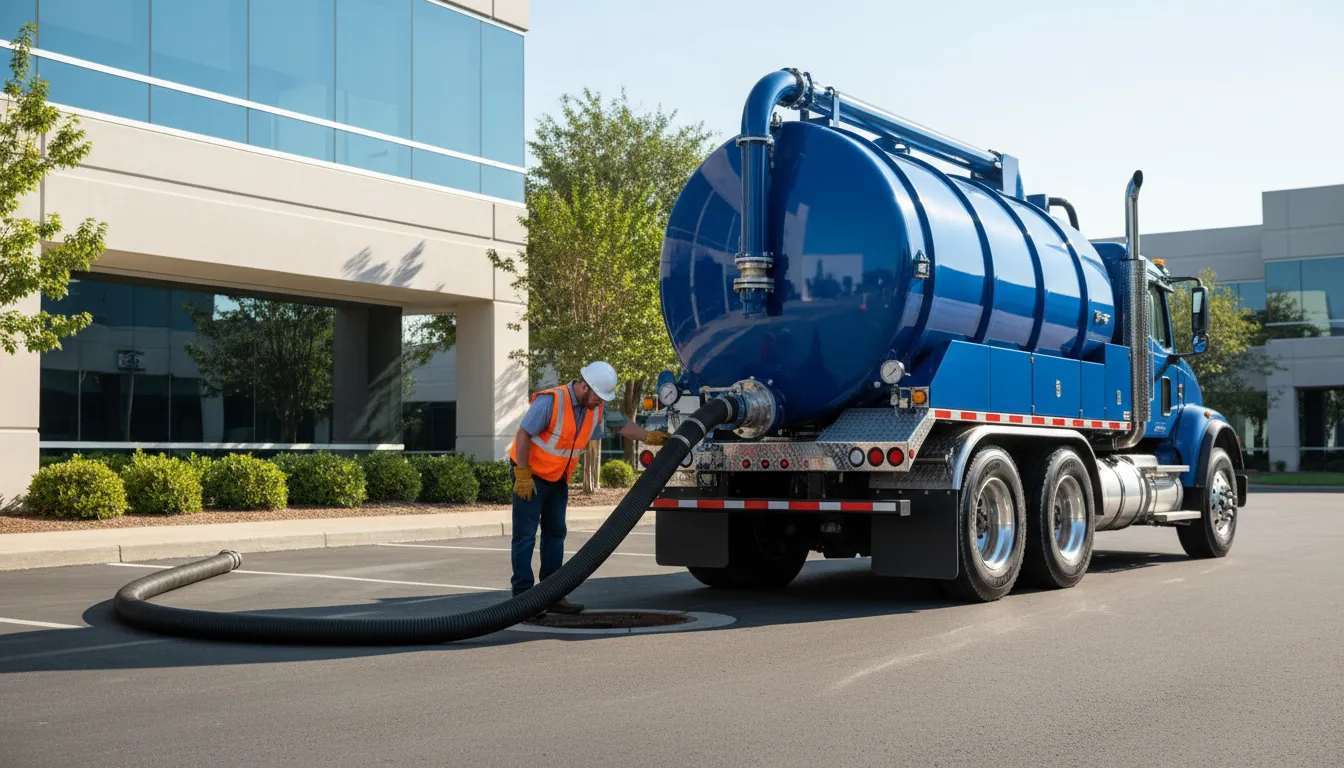
Need Emergency Septic Service?
Our 24/7 emergency team responds quickly across all of Florida. Don’t wait for a small problem to become a disaster.
Signs You Need Septic Tank Pumping & Cleaning
Commercial septic tank pumping becomes urgent when your system sends clear warning signals. Ignoring these signs leads to sewer backflow, contaminated soil, regulatory fines, and expensive repairs. Proper care helps you prevent issues and avoid costly repairs down the road.
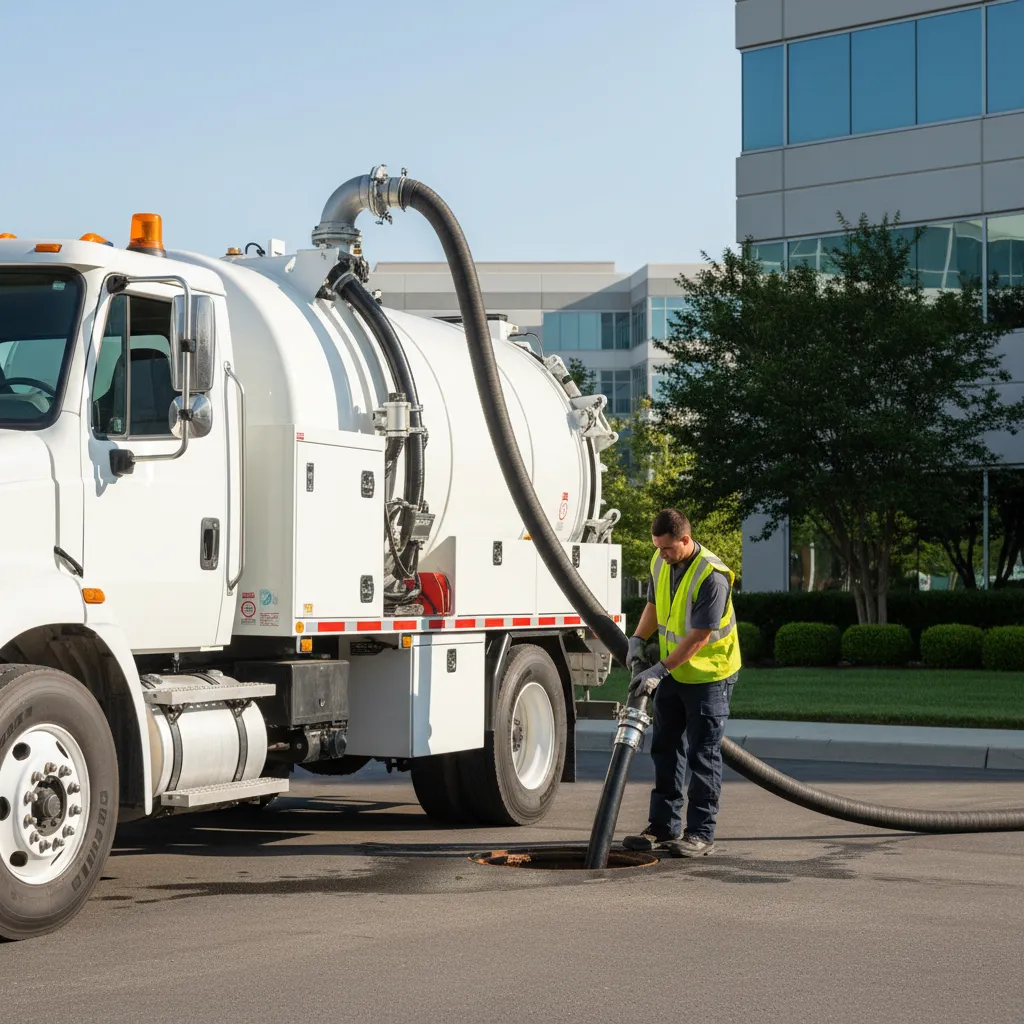
Slow drains throughout the building:
When multiple fixtures drain sluggishly at the same time, your septic tank has likely reached capacity. Settleable solids and sludge occupy too much volume, reducing detention time and forcing effluent out before proper separation occurs. A full pump out restores normal flow and improves system performance. Having your tank pumped on schedule keeps everything functioning properly.
Foul odors near the tank or drain field:
Odorous gases escaping from manhole covers, access ports, or saturated soil around your leach field indicate an overloaded system. The anaerobic bacteria inside the tank can’t degrade organic solids fast enough when the tank hasn’t been pumped on schedule. Professional pumping services eliminate odor and restore proper function. Don’t let unpleasant smells affect the surrounding area of your property.
Standing water or soggy ground over the absorption field:
Effluent surfacing above your lateral lines means the drain field is saturated. A clogged biomat, excess hydraulic load, tree roots infiltrating pipes, or an overfull tank that pushes suspended solids into perforated pipes will cause this. Pumping the tank and conducting a system inspection of the distribution box are the first corrective steps.
Sewage backup into floor drains or restrooms:
Blackwater backing up into your commercial building is a health hazard and a safety concern as well as a code violation. This happens when the tank overflows or the outlet pipe clogs with scum. Emergency pumping and a thorough cleanout of the sewer line resolve the immediate crisis. Our team responds quickly to protect your property and eliminate health hazards.
It's been more than one to three years since the last service:
Commercial septic systems handle far greater wastewater volumes than residential tanks. High use facilities like restaurants and laundromats may need pumping every few months. If you can’t remember your last service date, you’re overdue. Regular tank maintenance and tank inspection helps extend lifespan and ensures your system continues functioning properly.
Our Commercial Septic Tank Pumping Process
Commercial septic tank pumping follows a structured, step by step process that protects your property and your plumbing. Here’s what to expect when our service team arrives for your project.
Site assessment and tank location
Our trained technician reviews your site plan or as built drawing to locate the septic tank, risers, and access ports. If no records exist, we use probing tools and electronic locators to find buried lids. Proper planning ensures efficient service delivery.
Access and inspection
We uncover and open the tank’s manhole or riser lids. Before pumping, we measure sludge depth and scum thickness to document the tank’s condition. We inspect baffles, tee fittings, and the inlet pipe for damage or corrosion. This inspection helps us identify issues and determine if any repair or replacements are needed.
Pumping and agitation
Our vacuum truck operator inserts the suction hose and pumps the tank completely. We agitate settled sludge on the tank floor to dislodge compacted solids and ensure a thorough cleanout. The entire contents – sludge, scum, and liquid effluent – get removed. Proper pumping services enhance system performance and longevity.
Post pump inspection
With the tank empty, we inspect the concrete or fiberglass walls for cracks, leaks, and structural integrity. We check the outlet pipe and distribution box connection. Any damaged components or issues get documented and reported to you immediately. Our experts use testing and visual inspection to assess overall system health.
Hauling and disposal
We transport all septage in our sealed vacuum trucks to a permitted treatment plant or disposal site. We provide a manifest and service receipt for your compliance records. We also recommend your next pumping interval based on usage and tank capacity to help you keep your system maintained and improve long term performance.
Brands We Use
Commercial septic tank pumping demands reliable equipment and quality replacement parts. A-1 Bill Gibson Septic Service uses products from these trusted manufacturers:





We select these brands because they meet commercial grade durability standards and carry manufacturer warranties.
Other Services
Commercial septic tank pumping
Commercial septic pumping service
Vacuum truck septic service for businesses
Commercial septic system maintenance
Business septic tank cleaning
Scheduled septic pumping for commercial properties
Commercial grease trap pumping
Restaurant septic tank service
Grease trap and holding tank cleanout
Emergency commercial septic pumping
24 hour septic tank pumping
Overflowing septic tank emergency service
Commercial septage hauling and disposal
Septic waste transport service
Licensed septage hauler permitted disposal
Ready to Schedule Your Service?
Get upfront pricing and expert service from Florida’s trusted septic professionals.
FAQs About Commercial Septic Tank Pumping
What is commercial septic tank pumping?
Commercial septic tank pumping is the process of removing accumulated sludge, scum, and wastewater from a septic tank that serves a business or commercial property. A vacuum truck suctions the entire tank contents, and a licensed hauler transports the septage to a permitted treatment plant for proper disposal. This essential maintenance service keeps your septic system functioning properly and protects health and safety on your property.
When should a commercial septic tank be pumped?
Pumping frequency depends on tank capacity, daily wastewater volume, and the type of business. Restaurants and food service operations often need pumping every three to six months due to heavy grease and organic solids. Office buildings and retail properties typically require service every one to two years. Your technician will conduct an inspection and recommend a schedule based on measured sludge levels. Regular tank maintenance helps prevent issues and maintain optimal system performance.
Why is regular commercial septic pumping necessary?
Septic tanks accumulate solids over time. Without regular pumping, sludge and scum reduce the tank’s working volume, shorten detention time, and push suspended solids into the drain field. This clogs perforated pipes, damages the biomat, and leads to system failure. Routine maintenance and preventive maintenance prevent sewer backups, protect groundwater, and keep your business compliant with health department regulations. Proper care helps extend the lifespan of your system and improves overall efficiency.
How long does commercial septic tank pumping take?
Most commercial pump outs take between 30 minutes and two hours. Larger tanks, multiple compartments, or heavily compacted sludge may require additional time for agitation and thorough removal. Our experienced crews work efficiently to minimize disruption to your operations while ensuring we properly remove all sludge and enhance your system’s function.
Can a commercial septic tank be pumped during business hours?
Yes. Our pump trucks operate quietly enough for daytime service at most commercial properties. We coordinate access and parking logistics with your facility manager ahead of time. For businesses that prefer off hours service, we schedule early morning, evening, and weekend appointments. Contact our team to discuss your specific needs and get an estimate.
Does A-1 Bill Gibson Septic Service provide compliance documentation?
We do. Every commercial pumping job includes a detailed service receipt showing the date, tank location, volume pumped, condition notes, and disposal site information. These records satisfy health department inspectors and fulfill regulatory reporting requirements for your property. As a professional service provider, our company maintains complete documentation to support your compliance needs.