
Residential Septic Tank Pumping
Professional septic tank pumping keeps your home’s plumbing system and wastewater system running clean, safe, and compliant year after year. Our experienced professionals provide reliable solutions designed to ensure homeowners enjoy worry-free comfort and efficiency.
Licensed & Insured Florida Contractors
24/7 Emergency Response Statewide
Upfront Pricing – No Hidden Fees
Full Service Guarantee & Written Reports
5 Highlights on Residential Septic Tank Pumping
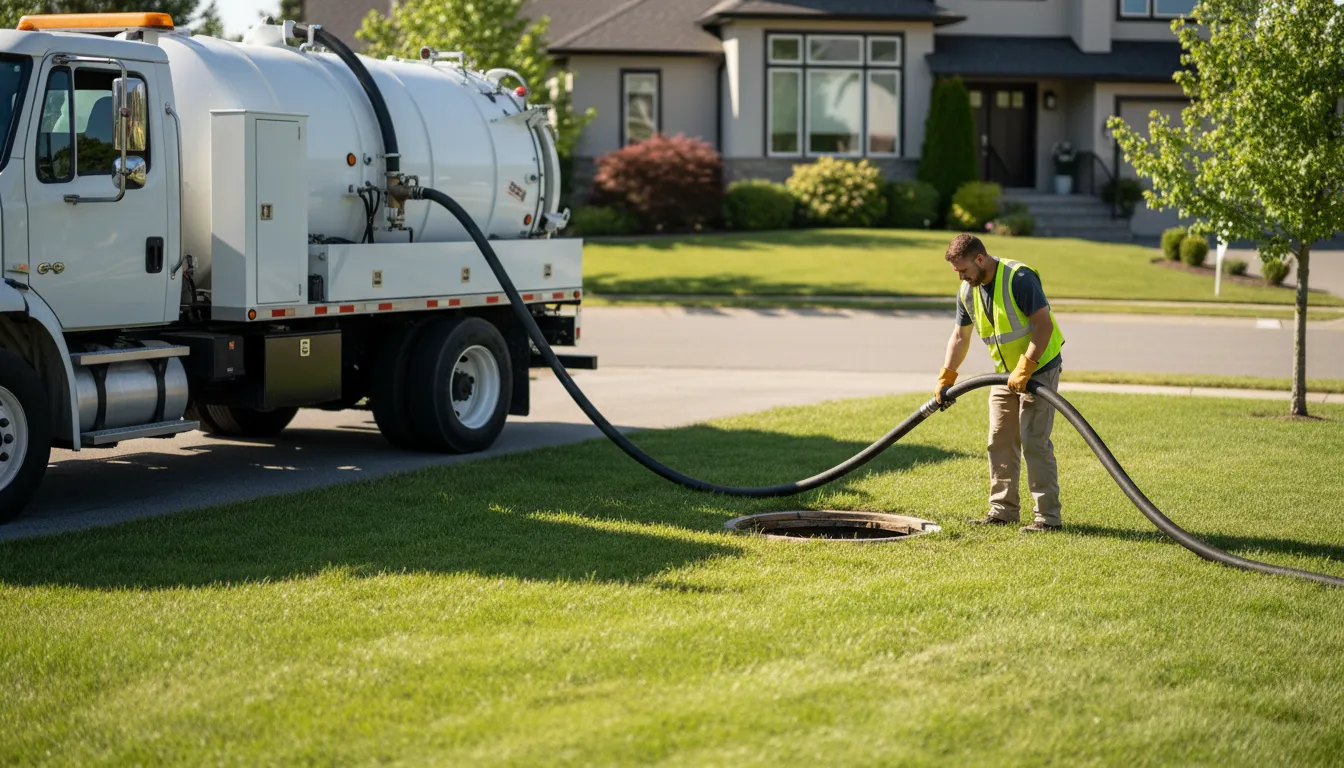
Full tank evacuation using industrial vacuum trucks
Our pumper crews suction all sludge, scum, and effluent from your concrete, fiberglass, or polyethylene septic tank. Every gallon gets hauled to a licensed disposal site, ensuring proper waste management and environmental compliance.
Baffle and effluent filter inspection included with every pump
Our experts inspect inlet and outlet baffles for cracks or corrosion. We handle effluent filter cleaning services on site so your drain field stays protected from solids and your plumbing system issues are prevented.
Accurate sludge and scum layer measurement before pumping
Our septic technicians probe each layer to document tank conditions with precision. This data tells you exactly where your system stands and helps us provide tailored solutions for any issue.
Riser and access lid assessment at no extra charge
If your tank lid sits buried underground, we locate it, dig to it, and recommend riser installation for easier future access. This level of service keeps maintenance efficient and ensures you can always contact us for same-day support when needed.
Proper septage transport and disposal through certified haulers
We convey all waste to approved treatment plants. A-1 Bill Gibson Septic Service maintains full compliance with local health department regulations and environmental standards to protect the ecosystem.
Why Choose Our Residential Septic Tank Pumping
Residential septic tank pumping is a job that demands the right equipment, trained technicians with decades of experience, and strict disposal protocols. A-1 Bill Gibson Septic Service delivers all three. Our company has built its business on trust, reliability, and customer satisfaction.
We operate a fleet of professional pump trucks and vacuum trucks sized for residential septic tanks of every capacity. Our crews pump conventional tanks, holding tanks, and cesspool systems across the region. Each technician carries current certification and licensing through the local health department, with extensive training and knowledge of plumbing services and septic system maintenance.
You get a thorough service from true professionals. We do not just suction the tank and leave. Our team inspects baffles, checks the inlet pipe and outlet pipe connections, provides drain cleaning when needed, cleans effluent filters, and examines the tank lid and risers for damage. We can also perform camera inspection to identify problems like tree roots, clogged lines, or sewer line issues. We document everything on a written service report you can keep for your records and for permit compliance.
Scheduling is straightforward. We offer routine maintenance contracts and flexible service schedules that fit your household’s needs. Our pricing stays transparent with no hidden fees for access lid excavation or filter cleaning. Whether you need emergency services or same-day repairs, we are always ready to help.
A-1 Bill Gibson Septic Service has built a trusted reputation as a top rated septic pumping provider. We are licensed, insured, and committed to safe septage disposal at approved facilities. Our experienced experts handle every aspect of your plumbing system with expertise and efficiency. When you need a qualified, expert pumping crew at your home, contact us and we answer the call.
Need Emergency Septic Service?
Our 24/7 emergency team responds quickly across all of Florida. Don’t wait for a small problem to become a disaster.
Signs You Need Septic Tank Pumping & Cleaning
Residential septic tank pumping becomes urgent when your system sends clear warning signals. Recognizing these signs early prevents costly drain field damage, groundwater contamination, and sewage backups inside your home. Our professionals can help you manage these problems before they break down your system.
Slow drains throughout the house:
When every sink, shower, kitchen sink, and toilet drains sluggishly at the same time, your septic tank is likely full. Sludge and scum layers have consumed the tank’s working volume, leaving no room for incoming wastewater to settle and separate properly. A backed up system cannot discharge effluent to the drain field. This is a plumbing system issue that requires immediate attention from experienced plumbers.
Foul, odorous smells near the tank or yard:
Stagnant sewage produces sulfur and methane gases that pose an environmental risk. If you detect a persistent foul odor near your septic tank location, around the access lid, or over the leach field, the tank needs pumping. Gases escape when the scum layer reaches the outlet baffle. Contact our company for emergency plumbing support.
Standing water or saturated soil over the drain field:
Overflowing effluent surfaces when the absorption bed cannot percolate wastewater fast enough. This often traces back to a tank that has not been pumped on schedule, pushing excess solids into the distribution box and lateral lines. Our experts provide solutions to restore flow and keep your system flowing properly.
Sewage backup into basement drains or ground floor fixtures:
This is the most alarming sign and requires emergency services. Blackwater reversing through your drainpipes and sewer line means the tank has zero capacity. Wastewater has nowhere to go but back toward the house through the inlet pipe. Our professionals offer same-day service to handle this critical problem.
Lush, unusually green grass patches over the septic system:
Grass that grows thicker and greener directly above your leach field or tank indicates effluent is leaching closer to the surface than it should. The soil is receiving more organic waste than it can filter and absorb, posing environmental concerns for the surrounding ecosystem. Pumping the tank reduces the hydraulic load on the entire subsurface system and ensures proper waste management.
Our Residential Septic Tank Pumping Process
Residential septic tank pumping follows a precise sequence designed to protect your system and your property. Our experienced professionals provide a wide range of services with efficiency and expertise.
Locate and access the tank
Our technician uses property records, probing tools, or electronic locators to find your buried septic tank. We dig down to the access lid or manhole cover and remove it. If your tank lacks a riser, we will recommend installation for next time to ensure easier access.
Measure sludge and scum layers
Before we pump, we lower a sludge judge into the tank to measure the depth of the sludge layer on the bottom and the scum layer floating on top. These readings confirm the tank needs service and give us baseline data. Our knowledge and training ensure accurate inspections every time.
Vacuum the tank contents
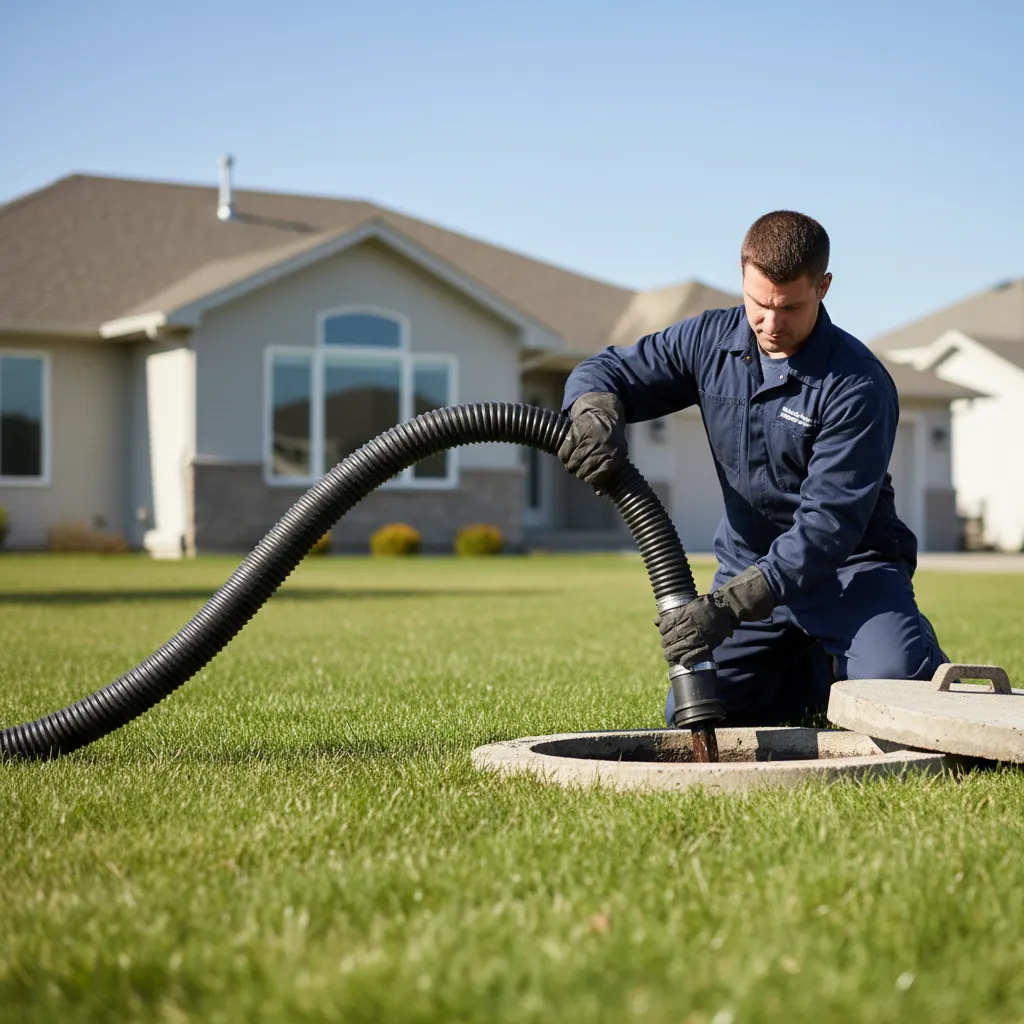
We connect the vacuum truck’s suction hose to the tank opening and extract all sewage, sludge, scum, and liquid effluent. Our operator agitates settled solids to ensure a complete cleanout. The entire tank gets emptied. We also check for leak detection issues and inspect pipes and lines for damage.
Inspect internal components
With the tank empty, we visually inspect the concrete or fiberglass walls for cracks and corrosion. We examine the inlet baffle, outlet baffle, and tee fittings. We pull and clean the effluent filter if one is installed. Our experts can also perform camera inspection to identify issues like tree roots or clogged drain lines. If repairs are needed, we provide tailored solutions.
Close, document, and haul
We reseal the access lid, backfill any excavated soil, and grade the surface. You receive a written service report with layer measurements, tank condition notes, and a recommended next pumping date. Our hauler transports all septage to a permitted disposal site or treatment plant, maintaining full environmental compliance. Customer satisfaction is assured with every service.
Brands We Use
Residential septic tank pumping requires dependable equipment and quality replacement parts. A-1 Bill Gibson Septic Service works with trusted industry brands to deliver safe, reliable results on every job.







All equipment undergoes routine maintenance and calibration.
Other Services
residential septic tank pumping
home septic tank pump out
sludge removal from septic system
septic pumping service
septic tank cleaning service
vacuum truck septage hauling
pump septic tank
drain septic tank
effluent filter cleaning residential
septic tank maintenance pumping
routine septic pump service
baffle inspection during pumping
residential septic system service
household septic tank emptying
drain field protection pumping
Ready to Schedule Your Service?
Get upfront pricing and expert service from Florida’s trusted septic professionals.
FAQs About Residential Septic Tank Pumping
What is residential septic tank pumping?
Residential septic tank pumping is the process of suctioning accumulated sludge, scum, and liquid effluent from a home’s underground septic tank using a vacuum truck. A certified hauler then transports the septage to a licensed disposal site or treatment plant for proper waste management. Pumping restores the tank’s working volume so wastewater can settle, separate, and discharge properly to the drain field. This essential plumbing service helps maintain your entire plumbing system and keeps everything connected and flowing efficiently.
When should I schedule septic tank pumping?
Most residential septic tanks need pumping every three to five years. Household size, water usage, hot water consumption, tank capacity, grease trap maintenance, and garbage disposal use all affect the schedule. A family of four with a 1,000 gallon concrete tank typically needs service closer to every three years. Your septic technician can measure sludge and scum layers during inspections to determine the right interval for your home. Contact our business to schedule a consultation with our experienced professionals.
Why does my septic tank need regular pumping?
Solids accumulate in the tank over time. Without pumping, the sludge layer rises and the scum layer thickens until solids escape through the outlet pipe into the distribution box and leach field. This clogs the absorption bed, creates a biomat barrier in the drainfield soil, and leads to overflowing sewage or a backed up system. Regular pumping prevents these failures, protects your plumbing system, and ensures environmental safety for the surrounding ecosystem. Trust our experts to help you maintain system efficiency and reliability.
How long does a residential septic pump out take?
A standard residential septic tank pumping takes 30 to 60 minutes once the access lid is exposed. Locating and digging to a buried lid can add time. The full visit, including inspection of baffles, effluent filters, and tank walls, usually runs about 60 to 90 minutes. Our experienced professionals work with efficiency to provide thorough service while respecting your time. We are always ready to handle any issues that arise during the process.
Can I pump my own septic tank?
No. Septic tank pumping requires a licensed vacuum truck, certified technicians with proper training and expertise, and access to a permitted septage disposal facility. Entering or working near an open septic tank exposes you to toxic gases, bacterial contamination, and drowning hazards. Always hire a qualified professional septic pumping service like A-1 Bill Gibson Septic Service. Our company provides safe, compliant solutions with decades of experience. Homeowners can be assured of worry-free service when they trust our professionals.
Does septic tank pumping fix drain field problems?
Pumping the tank reduces the hydraulic and solids load reaching your drain field. If the leach field has minor saturation from a neglected tank, pumping can restore flow and restore proper percolation over time. A severely clogged or failed drain field with extensive biomat buildup may need additional remediation, repair, or replacement beyond pumping alone. Tree roots can also cause issues that require trenchless repair solutions. Our experts offer a wide range of services including leak detection, camera inspection, and drain cleaning to address any problem. Contact A-1 Bill Gibson Septic Service for an inspection and we will provide tailored solutions designed to keep your system functioning at peak efficiency.