
Drain Field Installation & Replacement
Professional drain field solutions for residential and commercial property owners throughout Florida
Licensed & Insured Florida Contractors
24/7 Emergency Response Statewide
Upfront Pricing – No Hidden Fees
Full Service Guarantee & Written Reports
5 Highlights on Drain Field Installation & Replacement
Expert Site Evaluation and Perc Testing
Our certified septic contractors perform thorough percolation tests and soil analysis before every drain field installation. We assess soil composition, water table depth, and setback requirements to design a well-designed leach field that percolates and absorbs effluent properly for decades of long-term performance.
Full Excavation and Trenching Services
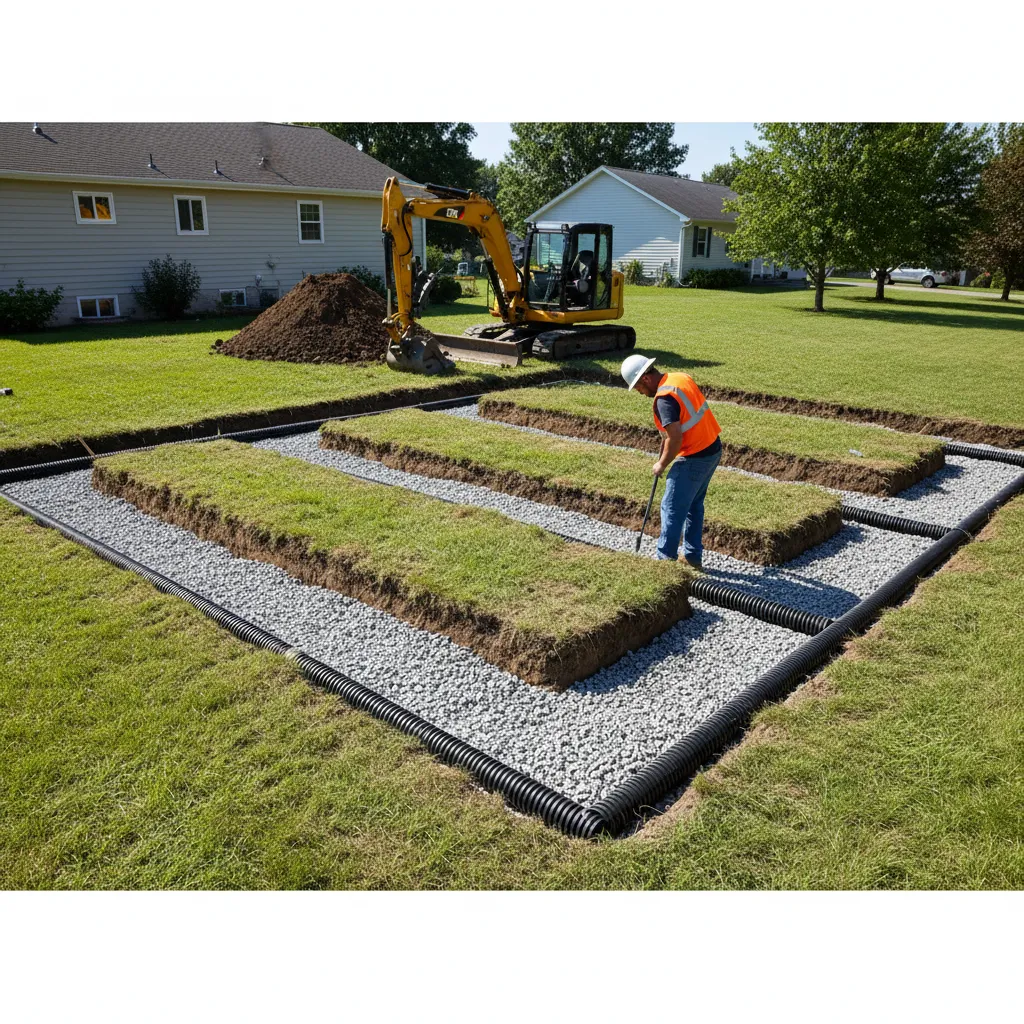
We operate backhoes, trenchers, and excavators to trench lateral lines, grade the subsurface bed, and install perforated pipe across your absorption field. Every gravel bed and gravelless chamber system we build meets local health department specifications and ensures efficient wastewater treatment.
Failing Drain Field Replacement
When your existing leach field is clogged, saturated, or backed up, we excavate the old system, remediate the soil, and install a new distribution box, header pipe, and lateral lines. We handle conventional, mounded, and alternative drain field configurations, including trenchless technology solutions where site accessibility and construction constraints apply.
Permit Coordination and Compliance
A-1 Bill Gibson Septic Service manages the full permit process with your county health department. We coordinate inspections, survey the site, and verify every installed component is compliant with local and state onsite wastewater regulations. Our experienced team can help guide you through the planning and review process required by your district.
Long Term Warranty and Maintenance Support
Each drain field installation and replacement we complete comes with a written workmanship guarantee. We also provide scheduled maintenance plans to inspect distribution boxes, monitor effluent flow, and service your entire septic system. Contact us to discuss your specific needs and schedule a free estimate.
Why Choose Our Drain Field Installation & Replacement
Drain field installation and replacement is the most technically demanding part of any septic system project. The work requires precise knowledge of soil permeability, effluent distribution, and subsurface hydraulics. A-1 Bill Gibson Septic Service has built and replaced hundreds of leach fields across residential and commercial properties. We specialize in wastewater management and are licensed, certified, and trusted by local health departments throughout Florida.
Our crews don’t subcontract. Every excavator operator, pipe installer, and site grader works directly for us. That means consistent quality from the first perc test to the final backfill and compaction. We grade each trench to exact specifications so gravity fed effluent disperses evenly across every lateral line. Our focused approach and customer-first management result in completed projects that exceed expectations.
We stock perforated PVC pipe, geotextile fabric, aggregate, gravelless chambers, and distribution boxes from top rated manufacturers. No waiting on materials. No delays. When your drain field fails, we respond fast because a saturated, overflowing leach field is a health hazard and can lead to environmental contamination and potential flooding in your yard.
A-1 Bill Gibson Septic Service also stands behind every installation with a written guarantee. We provide detailed as built drawings, maintain records with the health department, and offer affordable follow up inspections. Our reputation is built on doing drain field work right the first time. Property owners trust our record of quality, which is why homeowners and commercial property managers call us first. Request a quote to get started.
Need Emergency Septic Service?
Our 24/7 emergency team responds quickly across all of Florida. Don’t wait for a small problem to become a disaster.
Signs You Need Drain Field Installation & Replacement
Drain field failure doesn’t happen overnight. It develops over months or years, and recognizing the warning signs early can save you thousands in property damage and remediation costs. Understanding these common issues can help you make an informed decision about repairs or replacement before backups and other problems become severe. Here are five detailed indicators that your leach field needs professional attention.
Sewage Odor Near the Absorption Field:
A functional drain field treats and disperses effluent below the surface where aerobic and anaerobic bacteria decompose organic solids and grease. When you smell raw sewage or a persistent sulfur odor near your lateral lines, the biomat layer has likely thickened beyond its absorptive capacity. Effluent and debris are surfacing instead of percolating through the soil, which is designed to prevent contamination of the environment.
Standing Water or Saturated Soil Over the Leach Field:
Soggy ground, pooling water, or unusually green grass directly above your drain field trenches signals that the subsurface soil is saturated. The perforated pipes can no longer distribute treated wastewater because the surrounding gravel bed or chamber system is clogged with accumulated biofilm and solids. This is a common sign of infrastructure failure.
Slow Drains and Backed Up Fixtures Inside the Home:
When every sink, toilet, and shower drains slowly at the same time, the problem often originates at the drain field rather than the septic tank. A failing leach field creates hydraulic backup through the distribution box and into the tank, which then pushes effluent back toward your household plumbing. This can also affect sewer lines that connect to your private sewer system.
Septic Tank Fills Rapidly After Pumping:
If your septic tank reaches capacity within days or weeks of being desludged, effluent isn’t leaving the tank properly. The outlet baffle may be clear, but the drain field itself can’t accept flow. This means the absorption field soil has lost its permeability and the entire leach field needs replacement. Investing in a new system installation is often the most responsible decision for longevity.
Health Department Notice or Failed Inspection:
A non compliant inspection report from your county inspector is a definitive sign. Failed coliform tests in nearby monitoring wells, elevated nitrogen or phosphorus levels in groundwater samples, or visible surface discharge all trigger mandatory drain field replacement orders. A-1 Bill Gibson Septic Service can respond to these notices and conduct a thorough assessment to prepare and install a compliant system quickly.
Our Drain Field Installation & Replacement Process
Drain field installation and replacement follows a structured installation process that protects your property and produces a long lasting, compliant leach field. Here’s how A-1 Bill Gibson Septic Service handles every project from start to finish. You can expect clear communication at each step.
Site Survey and Soil Testing
We survey your property to identify setbacks from wellheads, easements, structures, and property lines. Our team performs percolation tests and soil borings to determine permeability, soil type (sandy, loamy, or clayey), and the depth to the water table. This information is essential for tailored system design.
System Design and Permitting
Based on perc test results and household wastewater volume, we design the drain field layout. This includes selecting between conventional gravel filled trenches, gravelless chamber systems, or mound systems. We submit plans to the health department and secure all required permits. Fees and scope vary depending on your local service area.
Excavation and Preparation
Our excavator and trencher operators dig lateral line trenches to precise depth and grade. We install geotextile filter fabric, place drainrock or aggregate, and set the distribution box at the correct elevation relative to the septic tank outlet. Proper access to the building and clearing of the work area ensure efficient labor and reduced stress on your landscape.
Pipe Installation and Connection
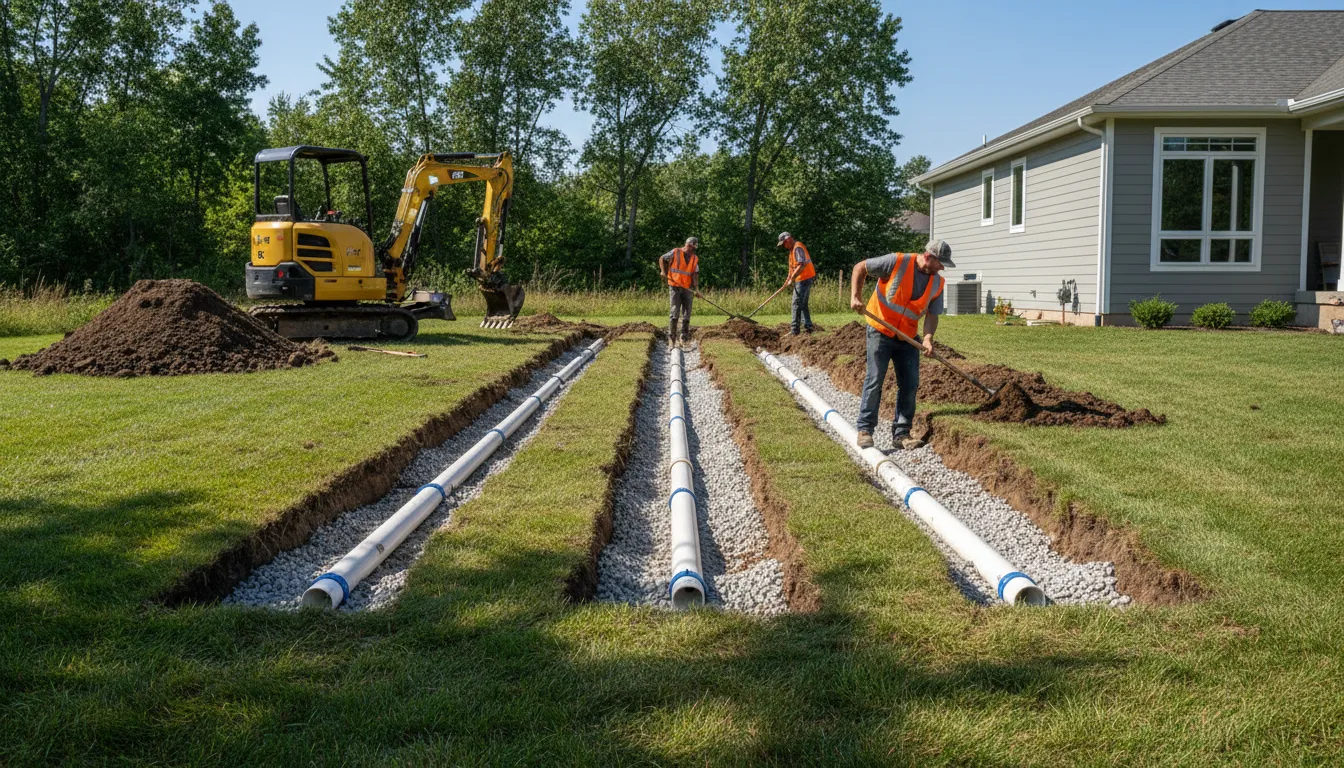
We lay perforated PVC pipe across each trench, connect lateral lines to the header pipe, and route everything back to the distribution box. Every elbow fitting, tee fitting, coupler, and reducer is solvent welded and inspected for proper alignment. We use the latest technology to ensure each sewer line connects properly to the sewer main.
Backfill, Compaction, and Final Inspection
We backfill each trench with approved material, compact the surface to proper grade, and install observation ports or monitoring wells as required. The county inspector verifies the installation before we restore your yard. Our team will answer any questions and recommend ongoing maintenance to cover the benefits of your new system.
Brands We Use
Drain field installation and replacement demands materials that perform underground for decades without degrading, cracking, or collapsing. A-1 Bill Gibson Septic Service installs products exclusively from these trusted, top rated manufacturers:





Every product we install meets ASTM standards and local code requirements.
Other Services
Drain field installation
Leach field installation
Septic lateral line trenching
Drain field replacement
Absorption field replacement
Failed leach field repair
New drain field cost
Leach field installation price
Septic drain field estimate
Drain field contractor near me
Septic field installer
Licensed septic system contractor
Residential drain field service
Home leach field replacement
Onsite wastewater disposal system
Ready to Schedule Your Service?
Get upfront pricing and expert service from Florida’s trusted septic professionals.
FAQs About Drain Field Installation & Replacement
What is a drain field and how does it work?
A drain field is the subsurface component of your septic system that receives effluent from the septic tank and disperses it into the surrounding soil. Effluent flows through a distribution box into perforated lateral lines buried in gravel filled trenches or gravelless chambers. Soil bacteria then filter, treat, and decompose remaining organic matter before it reaches the groundwater. This treated wastewater is an essential part of public and private onsite wastewater management.
When should I replace my drain field?
You should replace your drain field when you notice persistent sewage odors, saturated soil over the leach field, slow drains throughout the house, or rapid tank refilling after pumping. A failed health department inspection also requires immediate replacement. Most conventional drain fields last 20 to 30 years with proper maintenance. If you’re starting to see issues, request an inspection or consider an upgrade before problems escalate.
Why do drain fields fail?
Drain fields fail for several reasons. Excessive water use saturates the soil beyond its absorptive capacity. Lack of regular septic tank pumping allows solids to flow into the lateral lines and clog the perforated pipe. Driving or parking vehicles over the absorption field compacts the soil and crushes the distribution system. Tree roots can also infiltrate and block pipes. A remodel that adds bathrooms or increases water usage can also contribute to failure.
How long does drain field installation take?
A-1 Bill Gibson Septic Service typically completes a full drain field installation in two to five days depending on soil conditions, system size, and permit requirements. Replacement projects that require excavating and removing an old failing system may take an additional day. We’ll review the scope with you and provide a clear timeline before starting work.
Can you install a drain field in clay soil?
Clay soil has low permeability, which limits standard trench absorption. We can install mound systems, sand filter systems, or drip irrigation drain fields as alternative solutions for clayey soil conditions. Perc test results determine which system design your property requires. Our trenchless methods may also apply in certain situations where traditional construction is not feasible.
Does a new drain field require a permit?
Yes. Every drain field installation and replacement requires a permit from your local health department. A-1 Bill Gibson Septic Service handles the full permit application, coordinates required inspections, and delivers a compliant, certified system that meets all current onsite wastewater regulations. Contact us today for more information or to request a free estimate.