
Grease Trap Cleaning & Pumping
Professional grease trap cleaning and pumping keeps your commercial kitchen running, your plumbing system free of FOG buildup, and your business operating with smooth sanitation.
Licensed & Insured Florida Contractors
24/7 Emergency Response Statewide
Upfront Pricing – No Hidden Fees
Full Service Guarantee & Written Reports
5 Highlights on Grease Trap Cleaning & Pumping
Complete FOG Removal:
Our vacuum trucks extract all accumulated fats, oil, and grease from your grease trap or grease interceptor, leaving the tank clean and fully functional. We scrape and flush the baffle, inlet pipe, and outlet pipe to prevent future clogs and blockages in your pipes.
Scheduled Pumping Programs:
We set up recurring grease trap pumping on 30, 60, or 90 day cycles based on your kitchen’s volume. Flexible scheduling ensures your needs are met. Scheduled service prevents overflowing traps and keeps you compliant with local regulations.
Certified Hauling and Disposal:
Every load of grease, sludge, and wastewater we haul goes to a licensed disposal site or treatment plant for proper environmental handling. We provide manifests and documentation for your regulatory compliance records.
Full Inspection with Every Service:
Our team of technicians performs detailed inspections of your separator, check valves, and baffles during each visit. We identify corroded components, cracked lids, worn seals, and other issues before they cause backups, reducing your risk of costly repairs.
Commercial and Industrial Capacity:
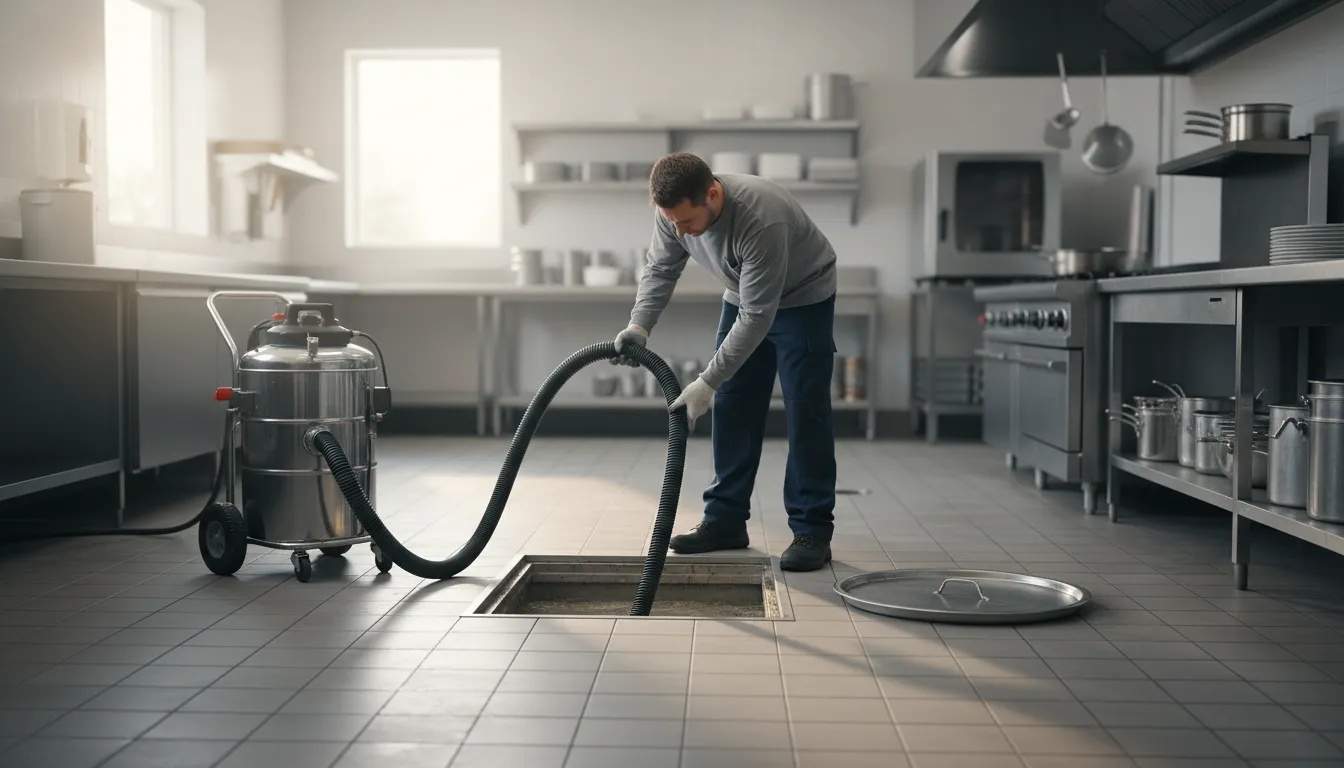
We serve food service establishments and industrial facilities with grease traps and interceptors of all sizes, from small restaurant units to large industrial separators handling thousands of gallons. Our pump trucks carry the equipment to handle any job across this range.
Why Choose Our Grease Trap Cleaning & Pumping
Grease trap cleaning and pumping is a service that demands reliability, proper equipment, and strict adherence to disposal regulations. A-1 Bill Gibson Septic Service has built a trusted reputation for professionalism and quality service in the septic system industry by delivering all three on every call. Customers trust us because we are reliable.
Our fleet includes dedicated vacuum trucks and pump trucks outfitted specifically for grease trap work and professional cleaning services. We don’t repurpose equipment between jobs. Each truck carries high capacity hoses, pressure washers, and hydro-jetting nozzles designed to degrease and clean out interceptors with efficiency. That means your trap gets professional cleaning down to the walls, not just skimmed on top.
We hold all required permits for FOG hauling and disposal, and our company is fully insured. Our technicians know the local compliance standards for grease interceptor maintenance and grease management, and we help you stay on the right side of inspections. Every service visit includes a clear written report documenting the volume pumped, the condition of your unit, and any recommended repairs.
A-1 Bill Gibson Septic Service offers same-day and emergency grease trap pumping for commercial kitchens facing backups or overflowing traps. We understand that a clogged grease trap shuts down your operation and causes costly downtime. Our team is ready with fast solutions, and our response times reflect that urgency.
We back our work with a customer satisfaction guarantee. If your grease trap isn’t cleaned to standard, we come back at no charge. That’s the kind of customer service and accountability that’s made us a leading, top rated provider in this industry, and why so many Florida businesses make us their choice based on our experience.
Need Emergency Septic Service?
Our 24/7 emergency team responds quickly across all of Florida. Don’t wait for a small problem to become a disaster.
Signs You Need Grease Trap Cleaning & Pumping
Grease trap cleaning and pumping is overdue when your kitchen starts showing specific warning signs. Recognizing these signs early helps you solve problems before they escalate, prevents costly sewer line backups and health code violations, and saves you stress.
Slow Draining Sinks and Floor Drains:
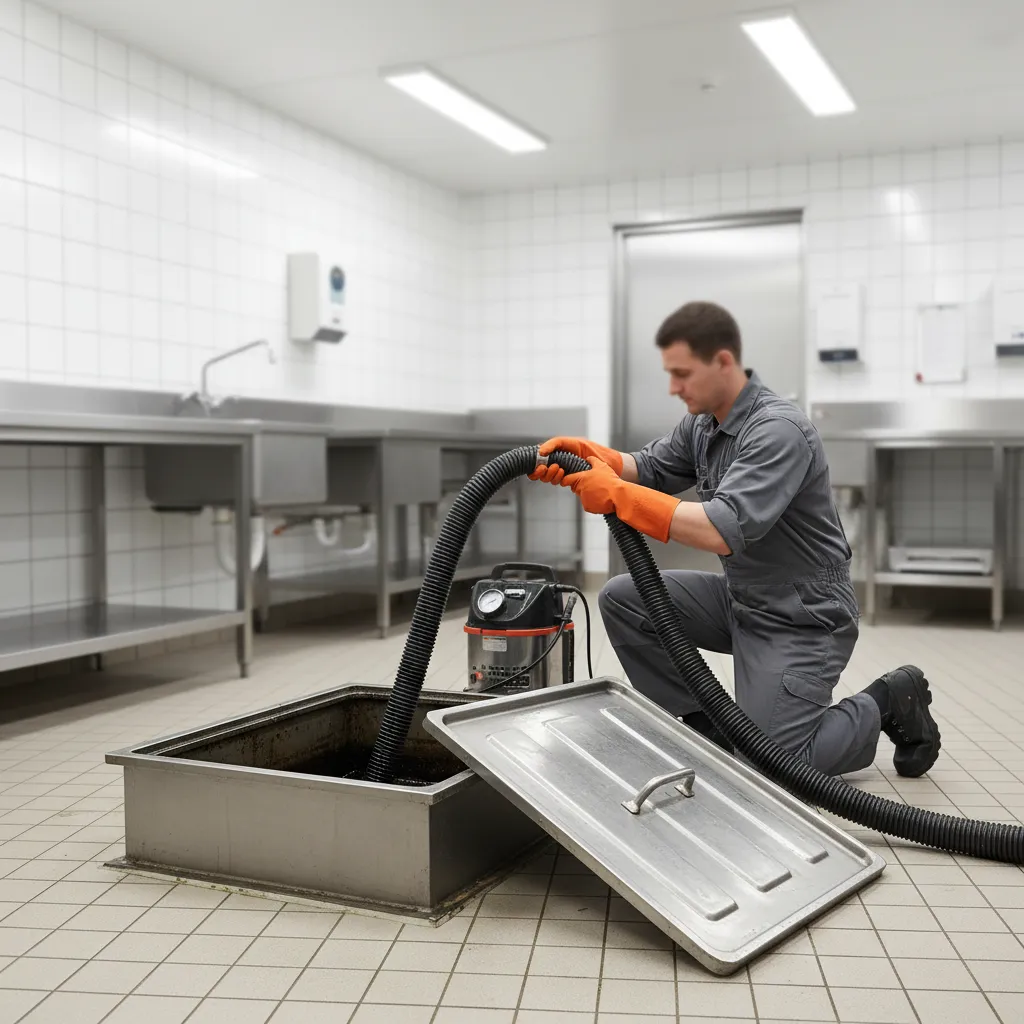
When your three compartment sink or floor drain takes longer than usual to empty, accumulated FOG is restricting flow through the grease trap. The grease layer and sludge layer inside the tank have thickened to the point where wastewater can’t pass through the clarified zone efficiently. This is the most common early indicator that pumping is needed.
Foul or Rancid Odors Near the Trap:
A malodorous smell coming from the area around your grease interceptor signals that organic material inside has begun to decompose anaerobically. Rancid grease and putrid sludge produce gases that escape through the access port, manhole cover, or any compromised seal. These unpleasant odors won’t go away until the trap is pumped and degreased.
Grease Visible in the Cleanout or Overflow:
If you see congealed grease or greasy residue around the cleanout, the outlet pipe, or pooling near the unit, your trap has exceeded its holding capacity. Greasy effluent is bypassing the separator and entering the sewer line. This creates a compliance violation and risks a municipal fine.
Frequent Drain Clogs in Kitchen Lines:
Repeated clogs in your drainpipes downstream of the grease trap point to FOG passing through an overloaded interceptor. Solids and viscous grease that should be captured in the trap are instead accumulating in your sewer lateral and soil stack.
It's Been 90 Days or More Since Last Service:
Most commercial kitchens need grease trap pumping every 30 to 90 days. If you’ve gone beyond that window, the trap is almost certainly saturated with fats, oils, grease, and sediment regardless of visible symptoms.
Our Grease Trap Cleaning & Pumping Process
Grease trap cleaning and pumping is a structured process that our expert technicians follow on every service call to deliver consistent, thorough results you can rely on.
Access and Assessment
We locate and open the grease trap or interceptor access port. Our technician measures the thickness of the scum layer and sludge layer to document the current condition and determine total waste volume.
Initial Pumping
Using our vacuum truck, we suction out all liquid wastewater, floating grease, and settled sludge from the tank. We pump the trap completely empty. Nothing gets left behind.
Scraping and Cleaning
Our crew manually scrapes the interior walls, baffles, and lid of the grease trap to remove congealed grease and residue that vacuum suction alone can’t extract. We clean the inlet pipe, outlet pipe, and any internal screens or skimmers.
Flushing and Hydro-Jetting
We flush the trap with clean water and use a hydro-jetter or pressure washer to scour the interior surfaces, connecting drainpipes, and the downstream cleanout. This step removes any remaining greasy film and restores full flow to finish the job right.
Inspection and Documentation
Our technician inspects the baffle, walls, seals, and fittings with a focus on signs of corrosion, cracks, or wear. We record the volume pumped, note any needed repairs, and provide a service report for your compliance files.
Hauling and Disposal
We transport all collected FOG, sludge, and wastewater to a permitted disposal site or treatment plant. We handle all manifests, disposal documentation, and waste management on your behalf.
Brands We Use
Grease trap cleaning and pumping requires professional grade equipment and products to get the job done right. A-1 Bill Gibson Septic Service uses trusted brands that the septic and wastewater industry relies on.







Safety is built into every step of our grease trap cleaning and pumping process.
Other Services
grease trap cleaning
grease trap maintenance
FOG removal service
grease trap pumping
grease interceptor pumping
commercial grease trap service
grease trap service
grease trap emptying
restaurant grease trap cleaning
grease interceptor cleaning
grease separator cleaning
grease trap compliance service
grease trap pump out
grease trap vacuum service
commercial kitchen grease removal
Ready to Schedule Your Service?
Get upfront pricing and expert service from Florida’s trusted septic professionals.
FAQs About Grease Trap Cleaning & Pumping
What is grease trap cleaning and pumping?
Grease trap cleaning and pumping is the process of removing accumulated fats, oils, grease, sludge, and wastewater from a grease trap or grease interceptor. A vacuum truck suctions out all contents, and technicians scrape and flush the interior to restore the trap to full working condition and extend its lifespan. The collected waste is then hauled to a licensed disposal site.
How often does a grease trap need pumping?
Most commercial kitchens need grease trap pumping every 30 to 90 days. High volume restaurants and food processing facilities often require monthly service. The frequency depends on the size of your interceptor, the volume of FOG your kitchen produces, and local regulatory requirements. Contact us for a quote, and we’ll recommend a schedule based on your specific operation.
Why does my grease trap smell so bad?
Rancid odors come from anaerobic decomposition of organic fats and food solids trapped inside the unit. When the scum layer and sludge layer build up past the trap’s capacity, bacterial fermentation produces malodorous gases. Pumping and cleaning the trap eliminates the source of the smell and can save you from health code issues.
Can a clogged grease trap cause a sewer backup?
Yes. A saturated or clogged grease trap allows FOG to pass into the sewer line, where it congeals and accumulates. Over time, this restricts flow and causes wastewater to back up into your kitchen drains, floor drains, and plumbing fixtures. Regular pumping prevents this.
Does my grease trap need to meet compliance standards?
Local health departments and municipal sewer authorities require commercial kitchens to maintain grease traps and interceptors on a regular schedule. Failing to pump and clean your trap can result in fines, failed inspections, and orders to cease operations. A-1 Bill Gibson Septic Service provides documentation with every service to support your compliance records.
How long does grease trap cleaning and pumping take?
A standard grease trap pump out takes 30 minutes to two hours depending on the size of the unit and the level of buildup. Larger interceptors or heavily saturated traps may take longer, especially if hydro-jetting or extensive scraping is needed.